Get in touch with PCBark Company


Last updated: October 2026
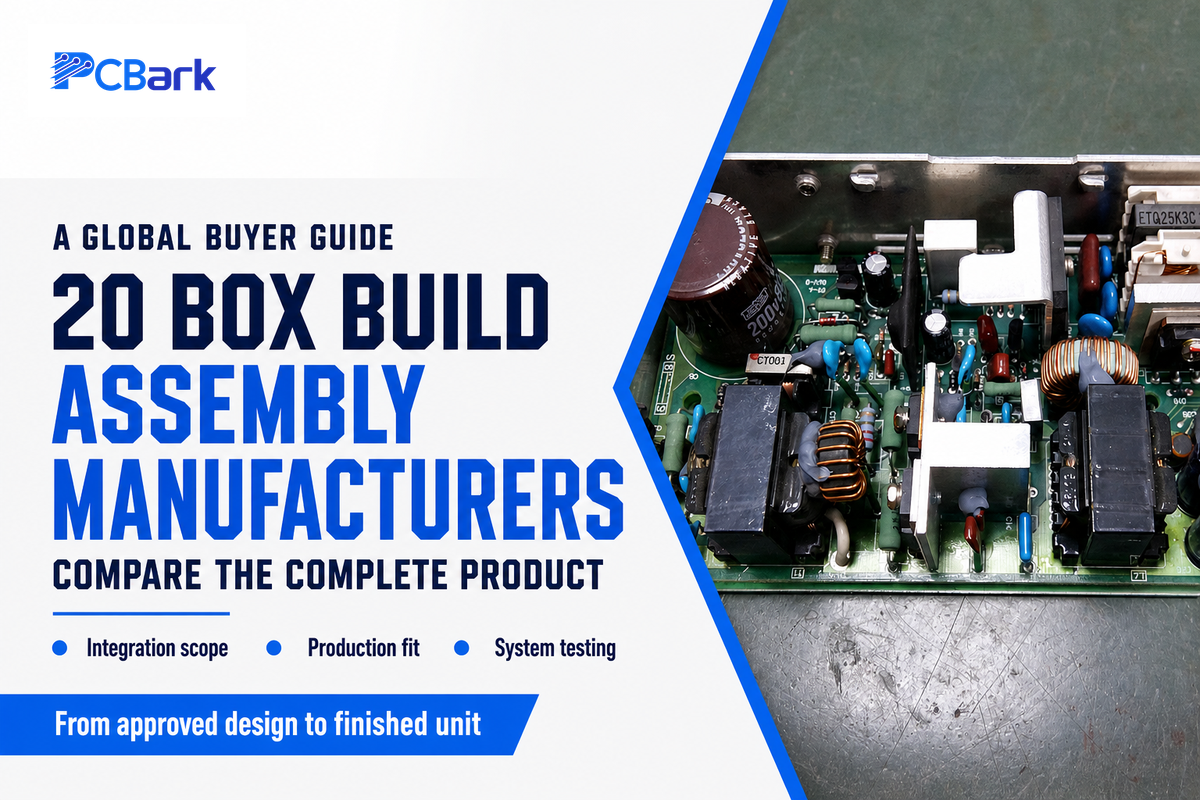
The best box build assembly manufacturers depend on the product: PCBark connects PCB fabrication with final integration, Jabil supports global system programs, PEKO focuses on complex equipment, and EC Electronics brings cable assembly depth. Compare the proposed factory, mechanical scope and finished-unit tests before choosing a manufacturer for your production program.
Just building the circuit board is only part of creating an electronic product. Box build assemblies combine the housing, cable routing, firmware configuration and final testing. Each has its own sourcing and release requirements. The best approach starts with your product requirements and the evidence a manufacturer provides about meeting those requirements.
Quick Picks
- Best for PCB fabrication through final integration: PCBark
- Best for coordinated global system programs: Jabil
- Best for mechanically complex custom products: Komaspec
- Best for cable-rich UK and European builds: EC Electronics
- Best for low-to-medium volume capital equipment: PEKO Precision Products
- Best for a defined California manufacturing location: Sierra Assembly Technology
Disclosure: This guide is published by PCBark. We list ourselves first because this is our website, not because we claim to be the market leader. The other 19 manufacturers are grouped by what they’re best for, in no particular order within each group.
How We Selected These Box Build Assembly Manufacturers
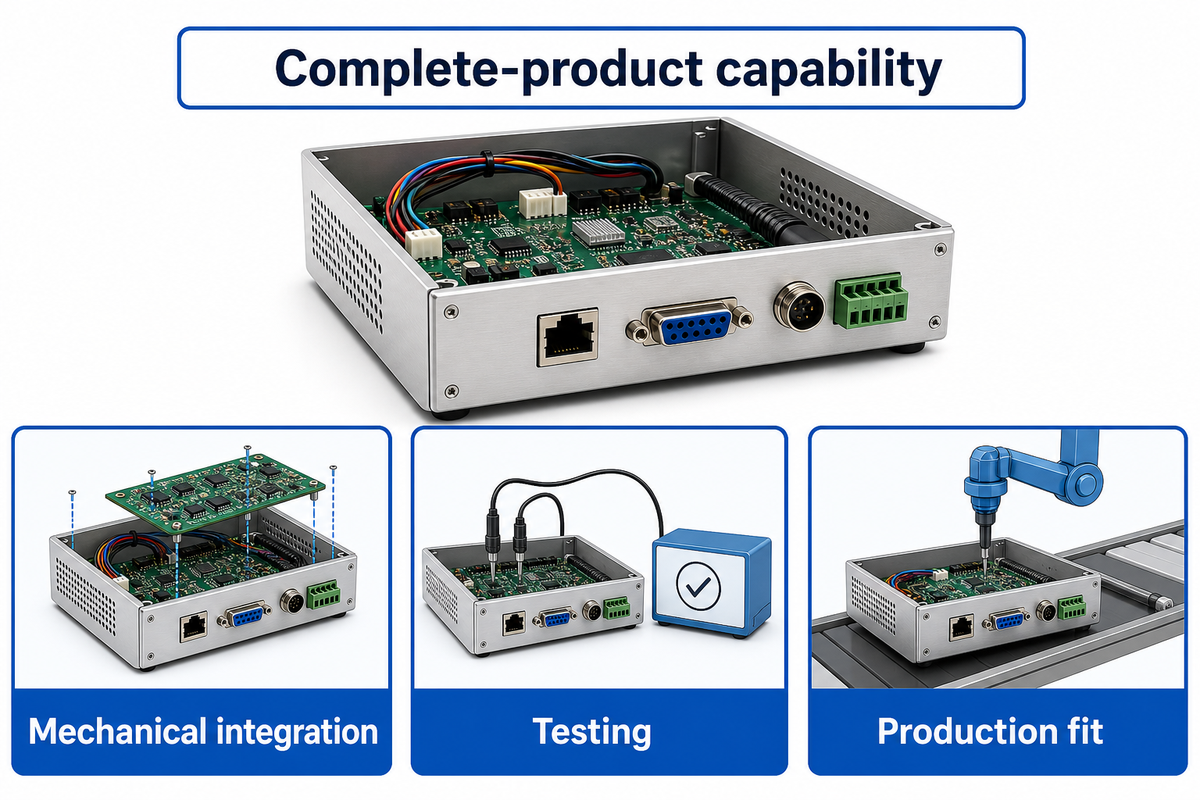
For electronics production and complete-system assembly capabilities, considering mechanical integration, testing, production fit and quality-system information, we researched a list of manufacturers, and verified the information against the manufacturers’ official websites and other publicly accessible information, in October 2026. Coverage is global; we didn’t include trading companies, distributors, sourcing platforms, directories, media websites, used-equipment dealers or duplicate entries for known group subsidiaries. The numbers don’t represent market share or performance ranking.
20 Box Build Assembly Manufacturers at a Glance
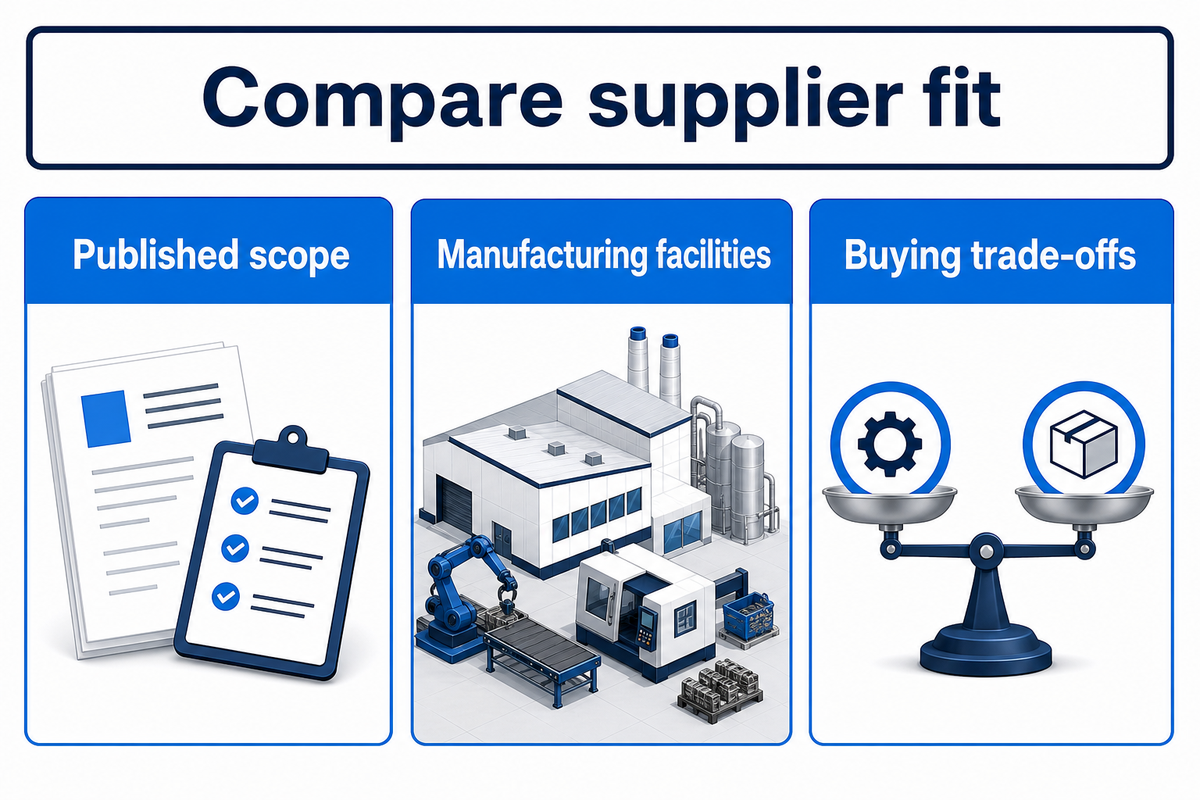
To help you target the product and production needs, the table entries show the company’s published offices or manufacturing facilities. The entries show what trade-offs a buyer is likely to consider for each manufacturer’s published scope. The trade-offs don’t mean a supplier is likely to reject an order for that product.
On a small screen, scroll horizontally. A dash in the founding-year column means the date wasn’t specified on the company’s webpages reviewed.
| No. | Company Name | Headquarters | Founded Year | Best For | Brief Introduction | Integration Scope | Key Advantages | Potential Disadvantages | Official Website |
|---|---|---|---|---|---|---|---|---|---|
| 1 | PCBark | Shenzhen, China (factory base) | 2010 | PCB fabrication through final system integration | PCB and electronics manufacturer | Board fabrication through packaged unit | Single program for boards, wiring and final test | China-based production requires an overseas shipping and import handoff for US buyers. | https://pcbark.com/ |
| 2 | Komaspec | Guangzhou, China (principal factory cluster) | 2005 | Mechanically complex custom products at growing volumes | Custom contract manufacturer | Metal, plastic, PCBA and harness integration | Mechanical fabrication and unit-level test traceability | Published production focus is medium-to-high volume custom programs. | https://www.komaspec.com/ |
| 3 | REGULUS | New Taipei City, Taiwan | — | Taiwan-based engineering-led product integration | Engineering-led Taiwan manufacturer | PCBAs, mechanics, wiring and system verification | Engineering review before project-specific production | Taiwan and China production routes are selected by project requirements rather than one fixed plant. | https://www.regulus-ems.com/ |
| 4 | AMPCO Manufacturers | Coquitlam, British Columbia, Canada | 1974; parent Ad-Print began in 1967 | Interface-rich industrial box builds | Industrial interface manufacturer | PCBAs, controls, interfaces and enclosures | Membrane switches and instrument-panel experience | Complexity and volume determine routing among head-office production, a partner and subsidiary-managed Asian sourcing. | https://ampcomanufacturers.com/ |
| 5 | Jabil | St. Petersburg, Florida, USA | 1966 | Globally coordinated electronics and system programs | Global electronics manufacturer | Box builds, NPI and system integration | Broad production network and design-for-X support | Multi-region system programs require factory-by-factory qualification and transfer planning; a global corporate presence does not provide one interchangeable production line. | https://www.jabil.com/ |
| 6 | Flex | Austin, Texas, USA | 1969 | Automated production with integrated mechanical manufacturing | Global manufacturing group | Electronics, mechanics, plastics and delivery | Automation and digital-twin production planning | Its automation and digital-twin offer has less relevance to a one-off manual assembly job than to a repeatable production program. | https://flex.com/ |
| 7 | Sanmina | San Jose, California, USA | 1980 | Complex systems with vertically integrated components | Vertically integrated manufacturer | Components, subassemblies and complete systems | Backplanes, optical work and precision mechanics | The benefit of its custom backplane, optical and precision-component portfolio is smaller for a simple box containing standard purchased parts. | https://www.sanmina.com/ |
| 8 | Celestica | Toronto, Ontario, Canada | 1994 | Configured infrastructure and high-level systems | Technology manufacturing group | High-level systems and build-to-order test | Server, rack and storage configuration capability | Its locations have distinct roles: server/rack integration, metal finishing and reverse-logistics sites are not interchangeable. | https://www.celestica.com/ |
| 9 | Plexus | Neenah, Wisconsin, USA | 1979 | Complex products needing engineering-to-manufacturing continuity | Engineering-led manufacturer | Design, NPI, production and aftermarket | Published Bevi complete-product example | Its published specialization is complex products in demanding markets; simple build-to-print products use less of its engineering-led offering. | https://www.plexus.com/ |
| 10 | Benchmark | Tempe, Arizona, USA | 1979 | Test-intensive capital equipment and complete systems | Complex-product manufacturer | System build, tuning and stress tests | RF tuning and capital-equipment integration | Its published complex, high-mix focus is a less direct fit for simple commodity runs. | https://www.bench.com/ |
| 11 | Kitron | Asker, Norway | 1962 (predecessor) | Industrial electrical cabinets and complex electronics | Industrial electronics manufacturer | Electrical cabinets, controls and box builds | PLC automation alongside electronic assembly | Its published specialization is electronics-containing industrial products; a purely mechanical cabinet order lies outside that core fit. | https://www.kitron.com/ |
| 12 | ESCATEC | Penang, Malaysia | 1984 | Medical and electromechanical assemblies with demanding integration | Electronics and mechatronics manufacturer | Medical and industrial system integration | Published Twinstream respirator assembly work | Its published commercial model favors sustained programs; minimum quantities depend on complexity and components. | https://www.escatec.com/ |
| 13 | Scanfil | Sievi, Finland | 1976 | Low-to-medium volume industrial systems | Industrial system supplier | PCBA, mechanics, system build and distribution | Explicit low-to-medium volume program focus | Published strategy prioritizes long-term, low-to-medium volume industrial programs. | https://www.scanfil.com/ |
| 14 | NOTE | Stockholm, Sweden | 1999 (group) | High-mix electronics and complete products near European customers | High-mix contract manufacturer | PCBA, complete products and aftermarket | Technical flexibility across product variants | The high-mix technical offering is less directly aligned with standardized commodity-volume purchasing. | https://www.note-ems.com/ |
| 15 | EC Electronics | Basingstoke, UK | 1984 | Cable-rich products requiring UK and European production | Electronics and cable manufacturer | Cable-rich box builds and protection processes | Cable assembly heritage and European operations | Its delivery model spans UK, Romanian and Dutch operations rather than a single domestic location. | https://ecelectronics.com/ |
| 16 | VSE | San Jose, California / Reno, Nevada, USA (production bases) | — | US-built PCB, harness and enclosure integration | US electronics manufacturer | PCB, harness, enclosure and final test | Published high-voltage assembly capability to 30 kV | Domestic production is concentrated in San Jose and Reno rather than an international plant network. | https://vse.com/ |
| 17 | Sierra Assembly Technology | Chino, California, USA (manufacturing location) | 1982 | California-based PCB-to-box-build programs | California assembly manufacturer | PCBA, wiring, firmware and packaging | Defined Chino production location | Its Chino-centered production footprint is narrower than a multi-region manufacturing network. | https://www.sierraassembly.com/ |
| 18 | A2Z Electronics | Elgin, Illinois, USA | 2021 | Low-to-mid volume, high-mix US builds | Illinois electronics manufacturer | PCBA, harnesses and integrated assemblies | Dedicated box-build workstations | The company was founded in 2021, giving it a shorter operating history than established multidecade suppliers. | https://www.a2zems.com/ |
| 19 | PEKO Precision Products | Rochester, New York, USA | 1966 | Low-to-medium volume machinery and capital-equipment assemblies | Equipment contract manufacturer | Machinery, cabinets and electromechanical systems | In-house fabrication and licensed electricians | Published volume focus is commonly low hundreds, rather than mass consumer-device production. | https://www.pekoprecision.com/ |
| 20 | Levison Enterprises | Millbury, Ohio, USA | — | Legacy-product redesign, repair and enclosure assembly | Ohio electronics manufacturer | Assembly, reverse engineering and repair | Legacy-product and panel-wiring capability | Its Northwest Ohio production base requires a US-centered assembly and service route. | https://levisonenterprises.com/ |
PCB and Mechanical Integration for Box Build Assembly
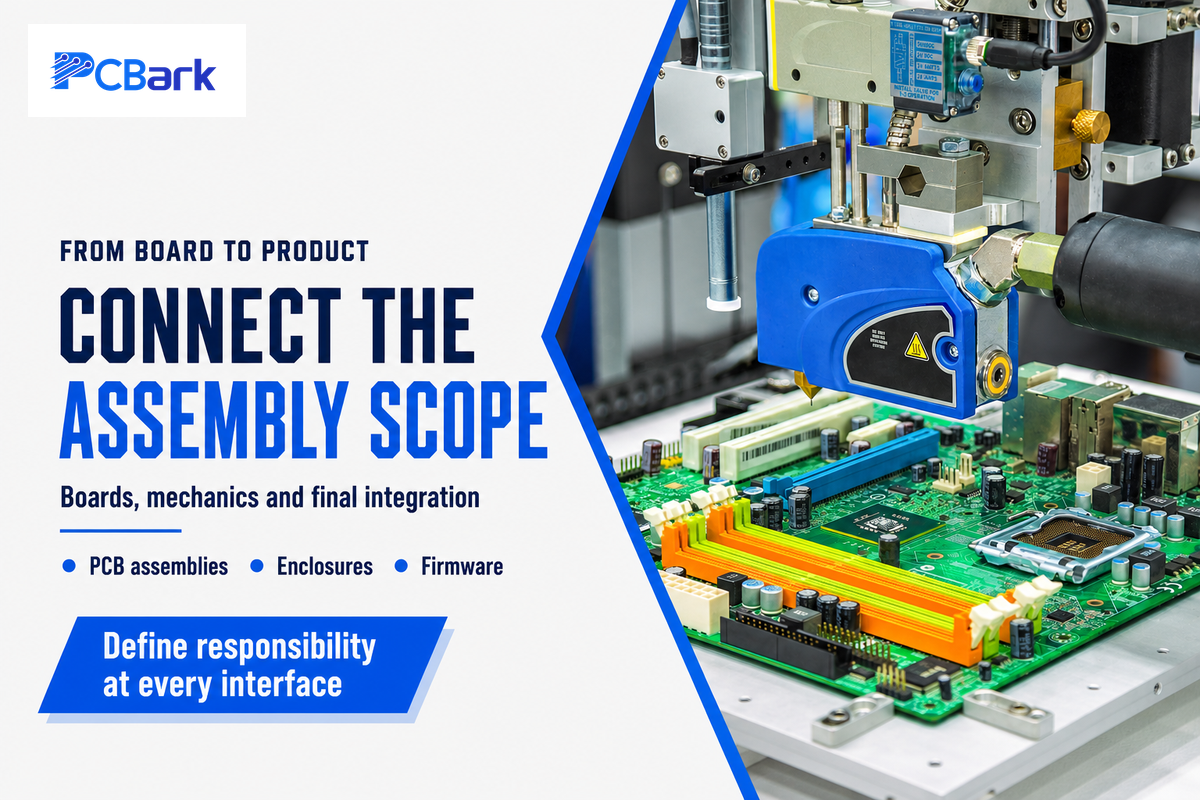
Board work, enclosure fabrication and final assembly don’t always belong to the same production team. These manufacturers offer different ways to connect those activities. PCBark explicitly describes bare-board fabrication within its service chain; the other profiles distinguish their own PCB assembly, mechanical manufacturing and integration offers.
1. PCBark: Best for PCB fabrication through final system integration
Headquarters / production base: Shenzhen, China (factory base) · Founded: 2010 · Type: PCB and electronics manufacturer
Official website: https://pcbark.com/
Main products: Bare PCBs, PCB assemblies, cable harnesses and finished electronic assemblies
Published capabilities: Enclosures, firmware loading, functional testing and packaging
Company-listed certifications / registrations: ISO 9001 and ISO 14001, according to its company page
PCBark connects board-level work with the practical details of a shipped electronic product: connectors, cable routing, enclosure fit and the firmware loaded into the finished unit. Its published service describes turnkey PCB box build assembly, including bare-board fabrication, populated boards and final integration, so buyers can discuss these interfaces with one manufacturing contact. That scope suits a team moving a PCB design toward a complete product without building a separate in-house assembly department. For US purchasers, the main trade-off is the China-based production route: overseas freight, import arrangements and the receiving inspection belong in the delivery plan, alongside the end-to-end box build itself.
2. Komaspec: Best for mechanically complex custom products at growing volumes
Headquarters / production base: Guangzhou, China (principal factory cluster) · Founded: 2005 · Type: custom contract manufacturer
Official website: https://www.komaspec.com/
Main products: Sheet-metal and plastic assemblies, PCBAs, custom harnesses and enclosures
Published capabilities: Firmware flashing, per-unit functional testing and unit-level traceability
Mechanical content often determines how difficult a custom box build becomes. Komaspec’s published offer brings sheet-metal parts, molded plastics, harnesses and PCBAs into the same production program, with injection molding up to 650 tons and firmware records tied to individual units. A buyer can therefore discuss housing changes and electronic interfaces together, which is useful when the full product needs a custom enclosure rather than a purchased box. Its stated medium-to-high volume focus makes growing repeat programs a closer fit than an isolated manual assembly job; the value lies in developing a repeatable box build production process for a custom design.
3. REGULUS: Best for Taiwan-based engineering-led product integration
Headquarters / production base: New Taipei City, Taiwan · Founded: Not publicly stated · Type: engineering-led Taiwan manufacturer
Official website: https://www.regulus-ems.com/
Main products: PCBAs, custom mechanical parts, harnesses and complete electronic products
Published capabilities: PCB layout, mechanical design, engineering review and final integration
Company-listed certifications / registrations: ISO 9001; company links an AFNOR record
REGULUS places engineering review ahead of quotation and production planning, with its headquarters in Sanchong and its factory in Xizhi. The company describes turnkey electronics manufacturing that connects PCB integration with custom mechanical parts, cable assemblies, programming and final testing, making it relevant when the design still needs work at the board-to-enclosure interface. Its box build assembly solutions also allow project-specific protection and material choices instead of treating every enclosure as interchangeable. Production can draw on Taiwan and China resources according to the project, so the commercial comparison concerns a proposed manufacturing route rather than a promise that every activity happens at one fixed Taiwan address.
4. AMPCO Manufacturers: Best for interface-rich industrial box builds
Headquarters / production base: Coquitlam, British Columbia, Canada · Founded: 1974; parent Ad-Print began in 1967 · Type: industrial interface manufacturer
Official website: https://ampcomanufacturers.com/
Main products: PCBAs, box builds, membrane switches, interface displays and industrial subassemblies
Published capabilities: Mechanical assembly, custom test jigs, molded interfaces and system testing
AMPCO’s background in industrial graphics and interfaces gives its electronic box build offer a different emphasis from a board-only assembler. Membrane switches, molded keypads, displays and instrument-panel manufacturing matter when operators interact with the finished equipment every day, and its published assembly scope combines those parts with PCBAs and custom testing. A buyer sourcing a control interface can discuss appearance, tactile parts and product assembly within the same program. The operating model is split: head-office work covers lower complexity, while a manufacturing partner and MTM Pacific support other volume and complexity bands, so the relevant constraint is which route will deliver the particular build.
Global Manufacturers for Complex System Integration
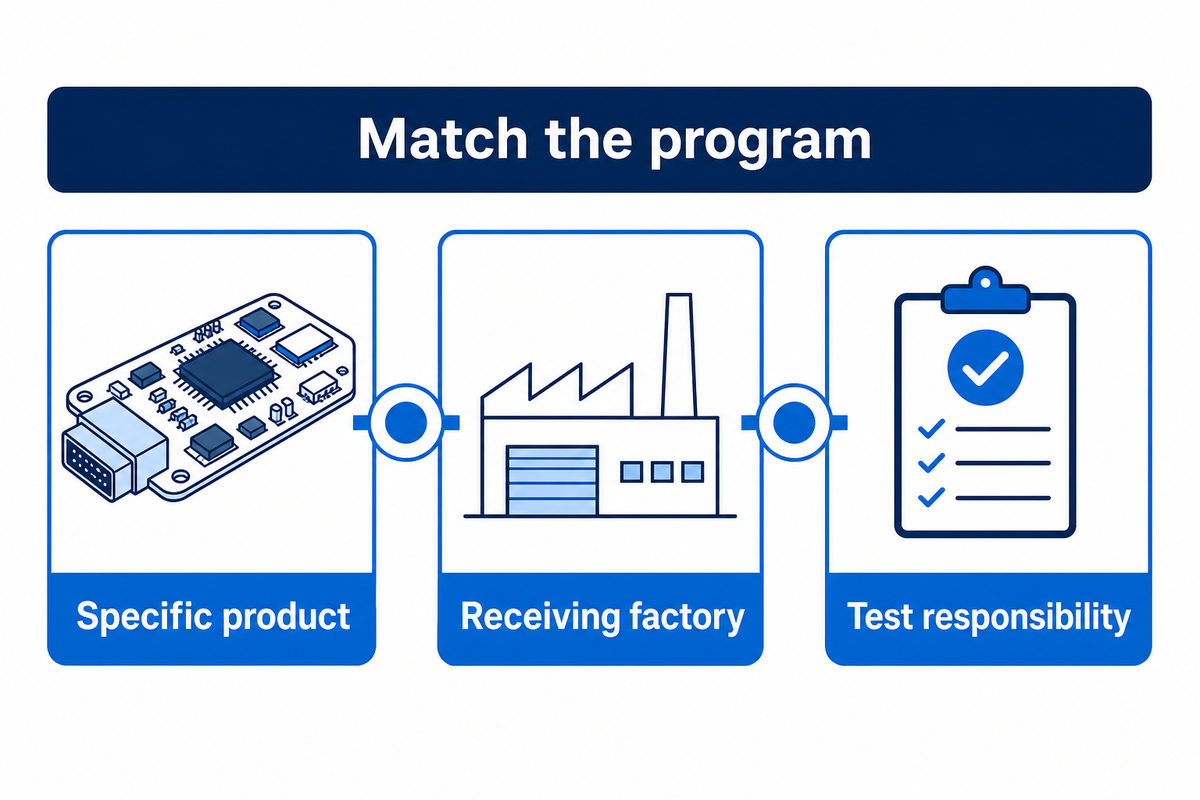
Large manufacturing networks can bridge products across regions and stages of development. When comparing them, the most relevant factor is the specific product, the receiving factory and the test responsibility. The following profiles identify published capabilities that distinguish such programs from a straightforward board-and-box assembly order.
5. Jabil: Best for globally coordinated electronics and system programs
Headquarters / production base: St. Petersburg, Florida, USA · Founded: 1966 · Type: global electronics manufacturer
Official website: https://www.jabil.com/
Main products: Electronics assemblies and complete systems
Published capabilities: Box build assembly, system integration, NPI and design-for-X support
Jabil explicitly lists box build assembly and system integration within its electronics capability, supported by design-for-X and new-product introduction. Its electronics manufacturing services are a plausible starting point when the product must move beyond one development location and into a coordinated production network, especially where electrical, mechanical and software teams all influence release. System integration services then connect the subassemblies to a defined finished configuration instead of ending at a populated board. Multi-region full-scale manufacturing still involves qualifying each receiving factory and planning transfers; the corporate footprint doesn’t make separate production lines interchangeable or remove the need for an agreed release package.
6. Flex: Best for automated production with integrated mechanical manufacturing
Headquarters / production base: Austin, Texas, USA · Founded: 1969 · Type: global manufacturing group
Official website: https://flex.com/
Main products: PCBAs, mechanical parts, molded plastics and finished products
Published capabilities: Automation, robotics, additive manufacturing and digital-twin line simulation
Flex combines advanced manufacturing with mechanical processes, plastics and advanced PCBA work, while its published production approach includes robotics and digital twins of factory operations. Those digital twins are useful for planning a new line, testing a change in demand or examining a process change before it affects the working floor. Buyers seeking scalable manufacturing can assess how that engineering supports their own assembly lines rather than relying on the size of the company alone. The trade-off is program fit: automation and production simulation contribute more to a repeatable product than to a one-off job that will remain almost entirely manual.
7. Sanmina: Best for complex systems with vertically integrated components
Headquarters / production base: San Jose, California, USA · Founded: 1980 · Type: vertically integrated manufacturer
Official website: https://www.sanmina.com/
Main products: PCBs, backplanes, cables, enclosures and complex systems
Published capabilities: Optical, RF, precision mechanical and finished-product test engineering
Sanmina’s assembly capabilities extend into the components that can make a complex system difficult to source: backplanes, optical technologies, RF work, enclosures and precision mechanical parts. Combining those processes with test engineering can help a buyer whose final product assembly depends on several custom interfaces, including complex PCB assemblies that must operate inside a larger system. Its public offer also covers fulfillment and repair, which keeps the discussion open beyond the initial shipment. A simple box made mostly from standard purchased parts gains less from this extensive custom-component portfolio; the strongest fit is a product that actually needs the integration depth.
8. Celestica: Best for configured infrastructure and high-level systems
Headquarters / production base: Toronto, Ontario, Canada · Founded: 1994 · Type: technology manufacturing group
Official website: https://www.celestica.com/
Main products: Configured systems, electronics and data-center infrastructure
Published capabilities: High-level system assembly, build-to-order configuration and tailored test solutions
Company-listed certifications / registrations: Toronto site lists AS9100D and AS9110C
Celestica describes high-level systems assembly and custom build-to-order services, with test solutions developed around the product’s requirements. Its San Jose-2 location specifically lists server, rack and storage integration, configuration and fulfillment, a concrete fit for infrastructure programs that need a complete product prepared for deployment. Complete system integration here includes the configuration state as well as the physical hardware, so two visually identical builds can still be different deliverables. The location choice matters: Celestica also operates metal-finishing and reverse-logistics sites, and those facilities can’t be treated as substitutes for a factory assigned to build and configure the system.
9. Plexus: Best for complex products needing engineering-to-manufacturing continuity
Headquarters / production base: Neenah, Wisconsin, USA · Founded: 1979 · Type: engineering-led manufacturer
Official website: https://www.plexus.com/
Main products: Complex medical, industrial and defense products
Published capabilities: Design, NPI, integrated testing, manufacturing and fulfillment
Plexus links design, new-product introduction, manufacturing, test and fulfillment across the product development lifecycle. Its own About page includes a Bevi customer testimonial identifying smart water dispensers manufactured in Appleton, a useful example of product design reaching finished-equipment production rather than stopping at the board. That end-to-end manufacturing approach suits teams with a complex product and several engineering disciplines to coordinate, particularly when sustaining and aftermarket work will continue after launch. The published specialization is demanding products and markets; a simple, fixed build-to-print order may use relatively little of the broader engineering-led offer, which should influence the buyer’s shortlist.
10. Benchmark: Best for test-intensive capital equipment and complete systems
Headquarters / production base: Tempe, Arizona, USA · Founded: 1979 · Type: complex-product manufacturer
Official website: https://www.bench.com/
Main products: Integrated systems, semiconductor capital equipment and medical products
Published capabilities: RF tuning, stress screening and full-system assembly
Benchmark’s system-build page gives buyers specific processes to discuss, including RF tuning and environmental stress screening alongside enclosure, display and front-panel integration. Those box build capabilities are relevant when a complex box build must be adjusted or exercised as a complete system before delivery, rather than merely inspected for correct component placement. Its manufacturing history also describes a focus on complex, high-mix work, and the current offer includes semiconductor capital equipment and medical products. Advanced box build buyers can use that test-oriented scope to frame their inquiry; simple commodity runs are less closely aligned with the specialization described in its own materials.
11. Kitron: Best for industrial electrical cabinets and complex electronics
Headquarters / production base: Asker, Norway · Founded: 1962 (predecessor) · Type: industrial electronics manufacturer
Official website: https://www.kitron.com/
Main products: Electronics, electrical cabinets and integrated industrial products
Published capabilities: PLC automation, electromechanical assembly, coating, potting and complete-unit testing
Company-listed certifications / registrations: Company lists ISO 9001, ISO 13485 and EN 9100:2018 among its systems
Kitron’s published offer includes electrical cabinets and PLC automation as well as conventional electronics manufacturing. The combination matters for industrial equipment where mechanical assembly, wiring, controls and final-unit tests have to work together, and its service list also covers protective processes such as coating and potting. Buyers can discuss movement into full-scale production with a provider whose stated scope reaches beyond the PCB to the industrial product containing it. That same focus sets a useful boundary: a purely mechanical cabinet order, without the electronics and system work, is outside the core fit described by Kitron’s company and service pages.
12. ESCATEC: Best for medical and electromechanical assemblies with demanding integration
Headquarters / production base: Penang, Malaysia · Founded: 1984 · Type: electronics and mechatronics manufacturer
Official website: https://www.escatec.com/
Main products: PCBAs, box builds, mechatronics and molded components
Published capabilities: Electropneumatic systems, high-voltage assemblies, functional tests and burn-in
Company-listed certifications / registrations: Penang page lists ISO 9001:2015 and ISO 13485:2016
ESCATEC identifies the Carl Reiner Twinstream MultiMode Respirator among its published box-build work, giving buyers a concrete example of medical electromechanical integration. Its complete box build assembly offer spans PCBAs, mechanical parts and test methods, with capabilities that include electropneumatic systems and burn-in; the Penang site separately lists medical quality-management coverage. Those details make the company relevant to a buyer seeking a complete box build with interacting pneumatic, electrical or mechanical functions. Its commercial model favors sustained programs, while minimum quantities depend on complexity and component conditions, so a short standalone run may fit differently from a continuing product line.
13. Scanfil: Best for low-to-medium volume industrial systems
Headquarters / production base: Sievi, Finland · Founded: 1976 · Type: industrial system supplier
Official website: https://www.scanfil.com/
Main products: PCBAs, mechanical assemblies and completed industrial products
Published capabilities: Box build, system integration, engineering and distribution
Scanfil states its target directly: industrial customers, products containing PCBAs, box build and system integration, low-to-medium volumes and long-term cooperation. A published customer example concerns Stryker LUCAS chest-compression equipment, which helps show the kind of complete system behind the broader contract manufacturing description. Its services for OEMs combine electronics with mechanical assemblies, engineering and distribution, so the integration services can remain relevant after a first production release. Buyers seeking a continuing industrial program fit that published strategy more closely than purchasers looking only for a brief, standardized, high-volume assembly campaign with little ongoing product support.
14. NOTE: Best for high-mix electronics and complete products near European customers
Headquarters / production base: Stockholm, Sweden · Founded: 1999 (group) · Type: high-mix contract manufacturer
Official website: https://www.note-ems.com/
Main products: PCBAs, subassemblies and complete products
Published capabilities: Early production engineering, sourcing, box build and aftermarket services
NOTE describes a strong position in high-mix electronics and complete products, with support that starts in production engineering and continues into aftermarket services. That emphasis makes its box build services relevant when product variants and technical requirements change across a program, and when sourcing and logistics need to stay connected to the manufacturing plan. Flexible production is useful only when the variants remain controlled, so the practical offer is a way to manage product differences rather than permission for undocumented changes. High-mix box build solutions are the closer fit; a buyer prioritizing a single commodity design at standardized volume may need a different production model.
Regional Electromechanical Assembly Specialists
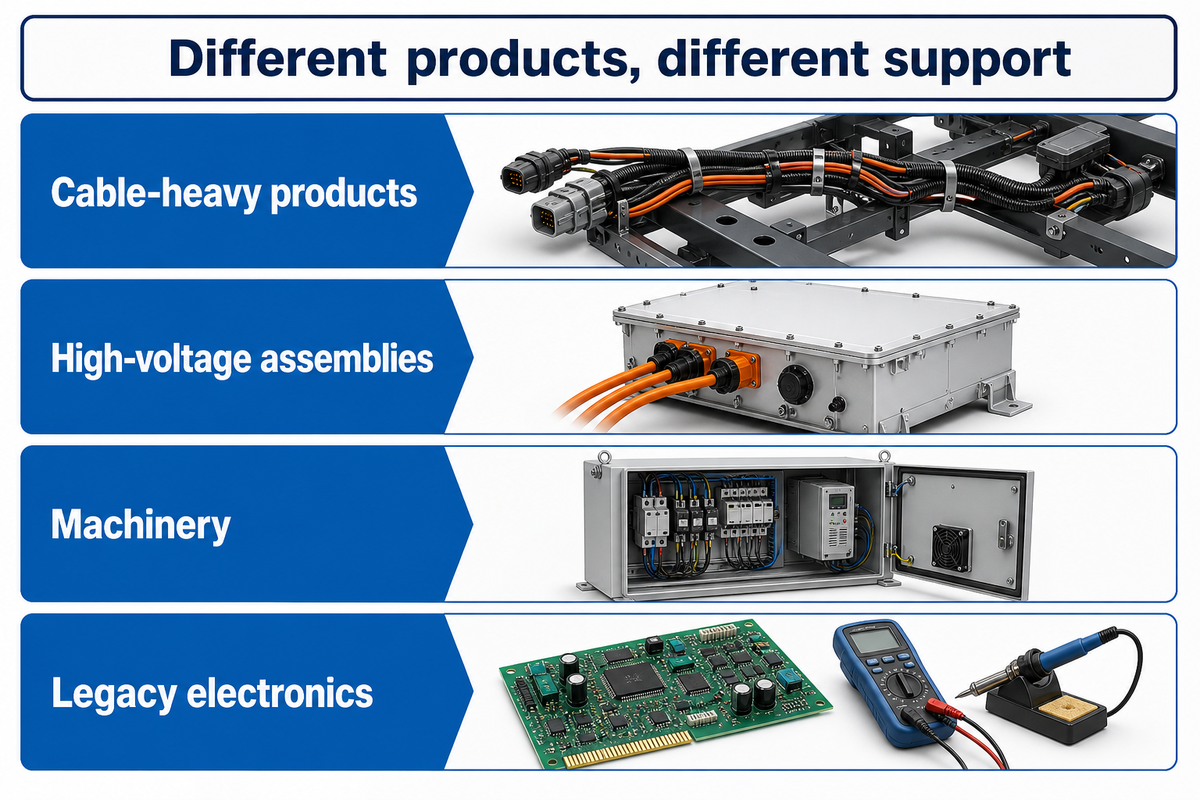
Some regional manufacturers can offer a more geographically concentrated production relationship. Their differences still matter: cable-heavy products, high-voltage assemblies, machinery and legacy electronics need different equipment and engineering support. These specialists provide concrete alternatives to customers who want to compare integration.
15. EC Electronics: Best for cable-rich products requiring UK and European production
Headquarters / production base: Basingstoke, UK · Founded: 1984 · Type: electronics and cable manufacturer
Official website: https://ecelectronics.com/
Main products: PCBAs, cable assemblies, overmolded parts and complete box builds
Published capabilities: Cable-to-enclosure integration, potting, coating, testing and logistics
Company-listed certifications / registrations: Company lists ISO 9001, ISO 14001 and ISO 45001
EC Electronics began as a cable assembly specialist, and that background remains relevant to products with substantial wiring, harnesses and enclosure connections. Its published box build assembly services combine PCBA, cable work, mechanical integration, testing and logistics, while the broader company offer includes overmolding, potting and conformal coating. Those manufacturing solutions suit a product where cable interfaces and environmental protection carry as much purchasing weight as the electronic manufacturing itself. Delivery can involve UK, Romanian and Dutch operations, so a buyer with a strict single-country production requirement must distinguish the offered manufacturing route from the location of the UK head office.
16. VSE: Best for US-built PCB, harness and enclosure integration
Headquarters / production base: San Jose, California / Reno, Nevada, USA (production bases) · Founded: Not publicly stated · Type: US electronics manufacturer
Official website: https://vse.com/
Main products: PCBAs, cable harnesses, enclosures and integrated devices
Published capabilities: Rack-mounted systems, DFM/DFA/DFT, in-circuit, functional and environmental tests
Company-listed certifications / registrations: Company lists ISO 9001 and ISO 13485
VSE describes complete integration of printed circuit board assemblies, harnesses and enclosures through its San Jose and Reno operations. Its PCB box build assembly services include rack-mounted systems, and the published capability list reaches high-voltage assembly designs up to 30 kV, a useful prompt for discussing insulation, test requirements and the actual product rating. Board work and complete-unit testing are part of the same offer, which suits a buyer wanting US production with engineering support at the interfaces. The regional concentration is also the trade-off: those domestic bases provide a different supply-chain option from an interchangeable international network of factories.
17. Sierra Assembly Technology: Best for California-based PCB-to-box-build programs
Headquarters / production base: Chino, California, USA (manufacturing location) · Founded: 1982 · Type: California assembly manufacturer
Official website: https://www.sierraassembly.com/
Main products: PCBAs, harnesses, enclosure assemblies and complete box builds
Published capabilities: Firmware loading, functional testing, inspection and final packaging
Company-listed certifications / registrations: ISO 9001:2015 and AS9100 Rev-D according to company pages
Sierra Assembly’s company history identifies two automated SMT lines in a 20,000-square-foot facility, while its service page places production in Chino, California. PCB box build assembly connects that board work with harnesses, enclosure integration, firmware loading and finished-unit testing, so the buyer can carry the board package into a wider assembly discussion. Its turnkey box build assembly services are therefore relevant to a US program that values a defined California manufacturing location and documented aerospace quality-system claims. The footprint is narrower than the global networks elsewhere in this list, a practical limitation when a program requires manufacturing redundancy across several regions.
18. A2Z Electronics: Best for low-to-mid volume, high-mix US builds
Headquarters / production base: Elgin, Illinois, USA · Founded: 2021 · Type: Illinois electronics manufacturer
Official website: https://www.a2zems.com/
Main products: PCBAs, box builds, harnesses and protected electronic assemblies
Published capabilities: Dedicated box-build workstations, AOI, X-ray, ICT and functional testing
Company-listed certifications / registrations: Company lists ISO 13485:2016 and ITAR registration
A2Z Electronics is the Elgin company founded in November 2021, and its published facilities include dedicated box-build workstations within a 20,000-square-foot operation. The offer suits prototype assembly and low-to-mid volume, high-mix work, with a path from prototype to production that can include harnesses, protection processes and customer-specific functional tests. Buyers evaluating a reliable box build assembly provider can ask how those workstations and test methods apply to their product. The clear trade-off is operating history: this company has a shorter record than the multidecade manufacturers in the comparison.
19. PEKO Precision Products: Best for low-to-medium volume machinery and capital-equipment assemblies
Headquarters / production base: Rochester, New York, USA · Founded: 1966 · Type: equipment contract manufacturer
Official website: https://www.pekoprecision.com/
Main products: Electromechanical machinery, cabinets, subsystems and complete equipment
Published capabilities: In-house machining, sheet metal, welding, electrical assembly and functional testing
Company-listed certifications / registrations: Box-build page lists ISO 9001:2015, ISO 13485:2016 and AS9100D
PEKO combines in-house machining, sheet metal and other mechanical fabrication with electrical assembly, including licensed electricians on its box-build team. That combination is useful for electromechanical assembly involving cabinets, capital equipment or machinery, where the structure and power wiring are substantial parts of the finished deliverable. Its assembly solutions therefore fit a different job from a small consumer enclosure containing a single board, and its company history begins with tool-and-die work in Rochester. Published volume expectations are low-to-medium, commonly low hundreds of units, so a buyer planning mass consumer-device production should treat that stated production model as a material fit constraint.
20. Levison Enterprises: Best for legacy-product redesign, repair and enclosure assembly
Headquarters / production base: Millbury, Ohio, USA · Founded: Not publicly stated · Type: Ohio electronics manufacturer
Official website: https://levisonenterprises.com/
Main products: Electronic assemblies, harnesses, panel wiring and finished box builds
Published capabilities: Reverse engineering, firmware programming, prototyping and functional testing
Company-listed certifications / registrations: Company lists AS9100, ISO 9001 and ISO 13485 certification by NSF-ISR
Levison combines new assembly work with reverse engineering and repair of legacy electronics. Its published services include panel wiring, harnesses and full box builds in small and large enclosures, plus software programming and testing, so a product can move beyond standard PCB assembly even when older design information needs reconstruction. That scope is useful for an assembly project involving obsolete components or equipment that must remain serviceable after the new build ships. The company is based in Northwest Ohio, which creates a US-centered production and repair route; buyers needing local manufacturing on another continent will face a different logistics arrangement.
How to Choose a Box Build Assembly Manufacturer
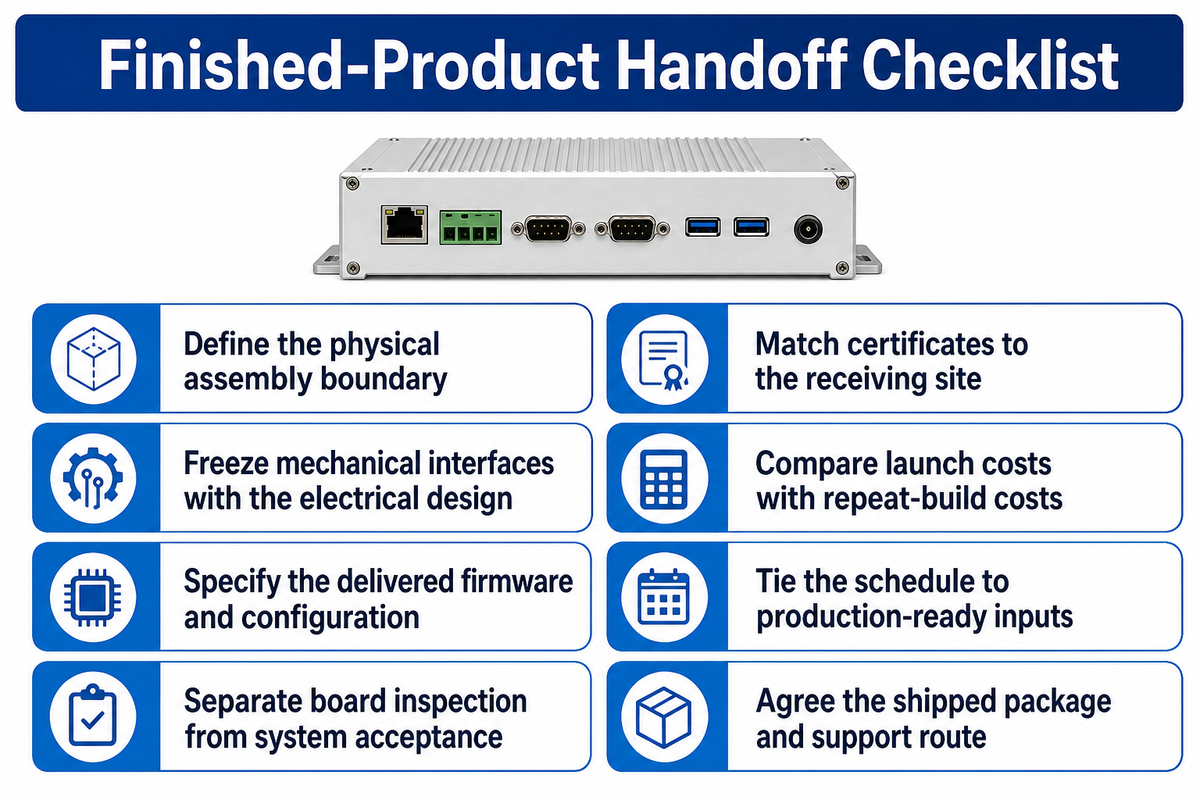
The right box build assembly partner should be able to describe how a customer’s approved design becomes a tested, configured and packaged unit. Compare the same scope across candidates. A lower assembly price means little if enclosure preparation, firmware loading or the acceptance fixture appears later as a separate responsibility.
Finished-Product Handoff Checklist
A finished-product hand-off checklist defines the approved hardware, software, test evidence and packing that must accompany each released product.
Use these eight checks when evaluating complete box build assembly services. These checks are applicable to a prototype as well as repeated batches and high-volume box build production, and the amount of process and tooling development will vary for each.
1. Define the physical assembly boundary
List the printed circuit board, harness, power supply, connectors, enclosure, labels and accessories in the delivered unit. Identify which items the manufacturer makes, purchases or receives from you. A turnkey box build assembly partner can manage bought-in parts without manufacturing every component itself; the quote should still identify who resolves a fit problem between those parts. PCBark’s PCB manufacturing guide provides board-level context when fabrication is part of the package.
2. Freeze mechanical interfaces with the electrical design
Include enclosure drawings, mounting positions, connector locations and cable routing with the electronic bill of materials. A board can pass electrical inspection and still fail to fit the housing or leave a connector inaccessible. For a fully integrated product, the box build assembly process must control those interfaces before repeat production begins. Indicate the approved drawing revisions and the process by which engineering changes are communicated to the assembly station.
3. Specify the delivered firmware and configuration
Indicate the firmware release, programming method and configuration options. Identify serial-number rules, what the factory must record after loading software, and how a failed programming attempt is handled. Evidence of configuration should accompany the final product, especially when the distributor or field service team will be installing the product with little or no involvement of the original engineering team.
4. Separate board inspection from system acceptance
Automatic optical inspection and X-ray help find board-level defects, while the final functional test checks the assembled device against its acceptance limits. Specify the inputs, outputs, loads and pass criteria that matter to product reliability, then identify fixture ownership and test-record delivery. A reliable box build needs a release decision based on the complete unit. Review the distinction through PCBark’s PCB inspection and testing methods before writing the acceptance scope.
5. Match certificates to the receiving site
Ask for the certificate, issuing body, validity and covered manufacturing location. A management-system certificate is different from a product approval, and IPC workmanship requirements are different again. The International Organization for Standardization’s ISO 9001 page identifies the 2026 edition; that publication alone does not invalidate a supplier’s certificate to an earlier edition. IPC’s J-revision announcement distinguishes soldering requirements from assembly acceptance. Put the required workmanship class and revision into the purchase specification.
6. Compare launch costs with repeat-build costs
Separate engineering, tooling, fixtures and first-article work from materials, recurring assembly, test and packaging. An early build can involve decisions that disappear from later batches, so a prototype quotation shouldn’t be treated as the steady production price. Ask how design changes affect those charges and what material commitments remain if the schedule changes. The prototype PCB assembly guide explains the board-level development stage that often precedes final integration.
7. Tie the schedule to production-ready inputs
State the quantity and release cadence and required delivery point, then identify the event that starts the quoted lead time. Approved drawings, available parts and a working test method can each impact readiness. Flexible assembly doesn’t remove a missing component from the critical path. A useful production schedule shows how the first approved unit, material availability and repeat-batch release connect, rather than offering one undifferentiated delivery promise.
8. Agree the shipped package and support route
Define accessories, labels, protective packaging, test records, and destination. Include the process for field failure reporting and returning a unit for analysis or repair. Quality control continues through that handoff: a correctly built product can still arrive without the configuration record or accessory needed to use it. The scope should identify the party that owns the issue after delivery, not have the buyer coordinate separate board, harness and enclosure vendors.
Do
- Send one revision-controlled quotation package.
- Define the finished-unit acceptance test.
- Identify the proposed production site.
Don’t
- Compare prices with different scope boundaries.
- Substitute board inspection for system testing.
- Assume a group certificate covers every facility.
Frequently Asked Questions
What is a box build assembly?
Box build assembly integrates electronics and mechanical parts into a finished, tested product.
The agreed scope can include populated circuit boards, wiring, power supplies, enclosure hardware, firmware loading, labels and packaging. Board inspection alone doesn’t demonstrate that the assembled system works: final functional tests must exercise the product against approved acceptance limits, with the required records included in delivery. A manufacturer may source some subassemblies externally while retaining responsibility for the agreed integration work. The key purchasing question is what complete, configured unit will arrive at your receiving dock.
Which is the best box build assembly manufacturer for low-volume projects?
PEKO and A2Z publish low-to-medium volume offers, but the stronger fit depends on the product.
PEKO is a closer starting point for machinery and capital-equipment assemblies with substantial mechanical content; A2Z describes low-to-mid volume, high-mix electronics work. Compare the actual integration tasks, material commitments and test-development charges rather than a minimum-order headline alone. A small batch with custom cables, a machined enclosure and a new fixture can require significant preparation. Quotes should separate that first-build work from the recurring cost of later batches built to the same approved design.
What is the difference between a box build manufacturer and a supplier?
A manufacturer performs specified production work; a supplier may also be a distributor, agent or reseller.
Some manufacturers buy enclosures, boards or harnesses from qualified partners and still perform final integration in their own facilities. The useful distinction is who controls the build, resolves interface problems, conducts acceptance testing and delivers the finished product. Ask which processes belong to the proposed factory and which come from partners, then compare that arrangement with your sourcing requirements. A single commercial contact can simplify coordination, but it doesn’t by itself establish that every component is made in-house.
How much does box build assembly cost?
There is no useful universal price without a product specification, quantity and acceptance scope.
Request separate figures for engineering and fixtures, materials, recurring assembly and test, packaging and delivery. Give every supplier the same electronic and mechanical bill of materials, firmware requirements and quantity schedule. Comparable inputs make price differences easier to explain.
When is turnkey box build better than separate suppliers?
Turnkey fits teams that want one manufacturer to coordinate sourcing, integration and acceptance.
Separate suppliers can suit buyers with proven specialist partners and internal integration capacity. The best arrangement depends on who can manage the interfaces and maintain the approved product configuration. One commercial contact doesn’t mean every component is manufactured in-house.
Who is the largest box build assembly manufacturer?
The reviewed public information does not establish a comparable ranking by box-build output or revenue.
Global electronics manufacturers report broader businesses, including components, design and other services. Total group sales can’t reliably rank this specific assembly category. Jabil, Flex and Sanmina are included for their published integration scope, not as a claimed size ranking.
Send a Complete Box Build RFQ
Select a few manufacturers whose published work matches your product. Send the same controlled package to each manufacturer in that shortlist. Include the electronic and mechanical bills of materials, enclosure drawings, harness pinouts, assembly instructions, firmware requirements, test limits and quantity schedule. If any documents are missing, indicate what they are so that the proposed scope of the work may address them prior to committing to a purchase price.
Key takeaway
The best supplier fit connects the proposed factory, physical assembly scope and finished-unit acceptance test to your product and production schedule.
For a program that combines PCB work with final integration, review PCBark’s box build assembly manufacturing capabilities and request a box build engineering scope review. Services include a discussion of the board package, enclosure interfaces and testing needs, so the quotation describes the product you intend to receive.
References & Sources
Company profiles draw on the manufacturers’ official company, capability and location pages. Standards context uses the following public sources.
- ISO 9001 quality management systems, International Organization for Standardization
- J revisions of J-STD-001 and IPC-A-610, IPC