Get in touch with PCBark Company

Turnkey Box Build Assembly & System Integration Services
Box build assembly is the complete integration of PCBs, cable harnesses, mechanical enclosures, and firmware into a tested, labeled, ready-to-ship product — managed end-to-end by a single EMS provider. PCBark delivers that complete assembly, every stage in-house, one production chain, one point of accountability. No MOQ. Free DFM review on every quote.
CAPACITY
500,000 sq m Annual Production Capacity
EXPERIENCE
22+ Years EMS Experience
SCALE
No MOQ, Prototype to Mass Production
SERVICE
Free DFM Review Included
[ L3::FACILITY ]
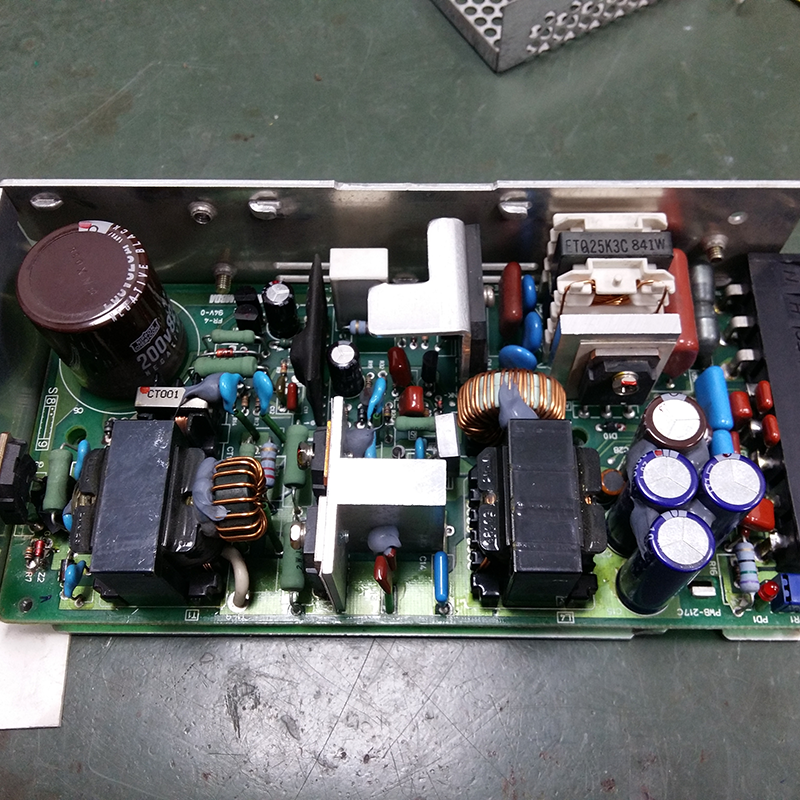
[ L2::HDI_ASSEMBLY ]
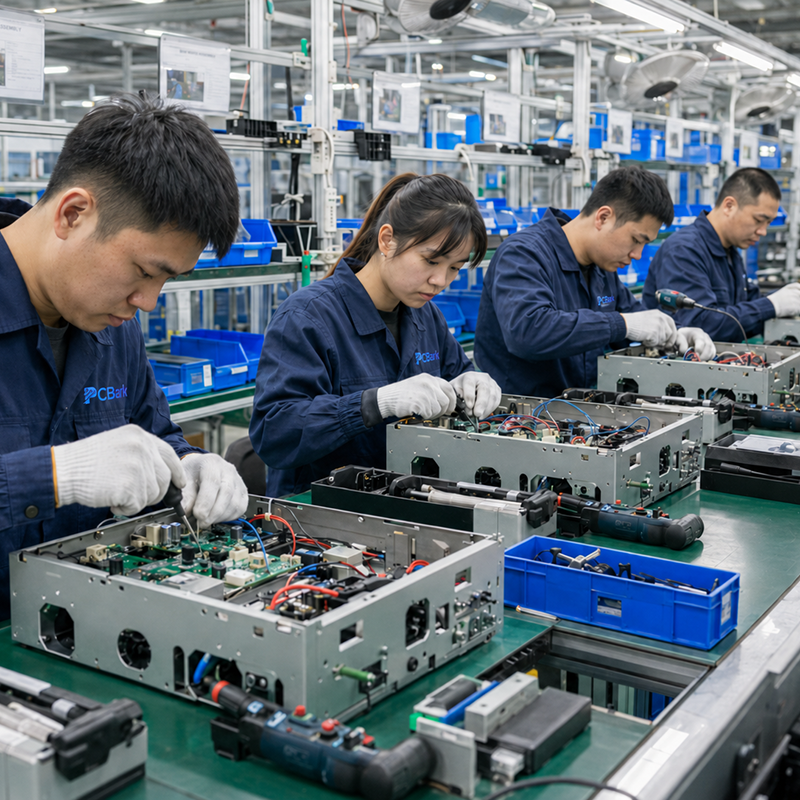
[ L1::CORE_LAYOUT ]
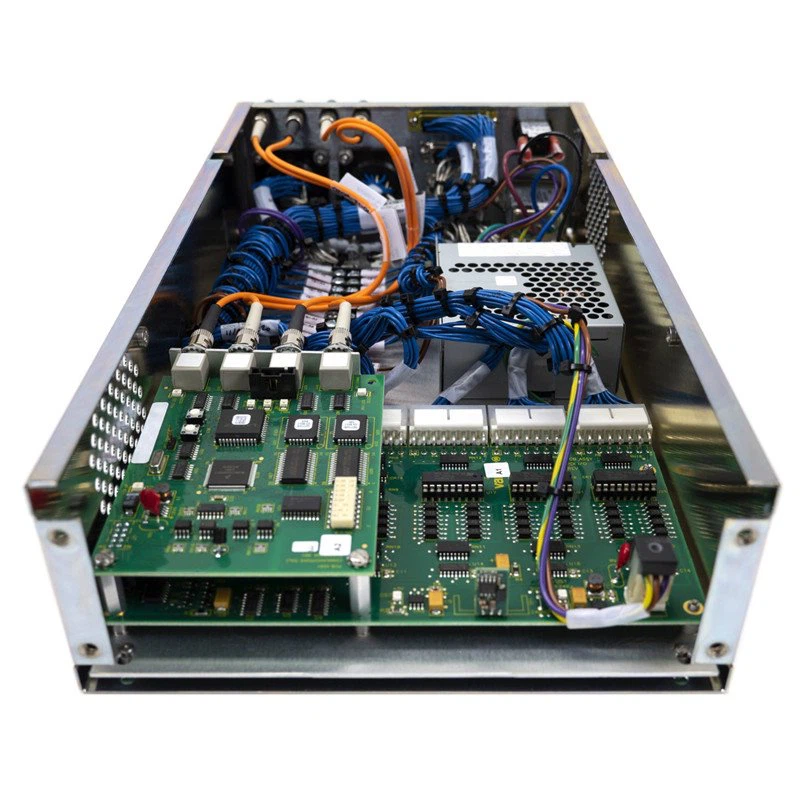
[ SYSTEM STANDBY ]
CAPABILITIES
[ SYS.CAPABILITY ]
PCBark Box Build Assembly,
PCBark Box Build Assembly,
Complete Capability at a Glance
-
01 //
Full vertical integration:
In-house PCB fabrication (1–42 layers, HDI, rigid-flex, aluminum substrate), SMT assembly (BGA/CSP/QFN), THT, cable harness assembly, enclosure integration, firmware programming, and ESD-safe packaging, no subcontracting
-
02 //
Production scale:
500,000 sq m annual production capacity | No minimum order quantity from 1 prototype unit to 100,000+ annual volume
-
03 //
Certifications:
ISO 9001:2015 | IPC-A-610 Class II/III | UL | RoHS
-
04 //
Inspection depth:
3D SPI (3 systems) → AOI (4 systems, inline + offline) → X-ray for BGA/BTC → Functional testing → Burn-in available
-
05 //
Included at no charge:
DFM/DFA review with every quote, engineering gap analysis, component alternative
DATASTREAM INTEGRATION
Box Build Assembly, From Individual Components to a Complete, Tested System
Managing a PCB fabricator, a separate SMT house, a cable assembly specialist, an enclosure vendor, and a shipping broker is how most product teams start. It’s rarely how they want to continue. Coordinating five suppliers across two continents for a single product release means five revision control streams, five lead times to track, and five points where a miscommunication can hold up your production run.
Box build assemblies exist to collapse that coordination chain. A complete box build integrates all major electronic and mechanical subcomponents into a finished, functional unit: printed circuit board assemblies, cable and wire harness assemblies, power supplies, connectors, mechanical fasteners, firmware-loaded controllers, and ESD-safe packaging. The output isn’t a bare board awaiting further assembly. It’s a product ready for your warehouse, a distributor’s rack, or direct shipment to an end customer.
PCBark assembles box builds across the full complexity spectrum, from single-PCB consumer enclosures to multi-board electromechanical systems with regulatory compliance records. Our DFM team aligns your design to production requirements before manufacturing begins, so the scope you quote is the scope that ship.
⌖ [SPI_SCAN_0.25]
LN // 42
GRID_X // 1600
⌖ [Z_OFFSET_35mm]
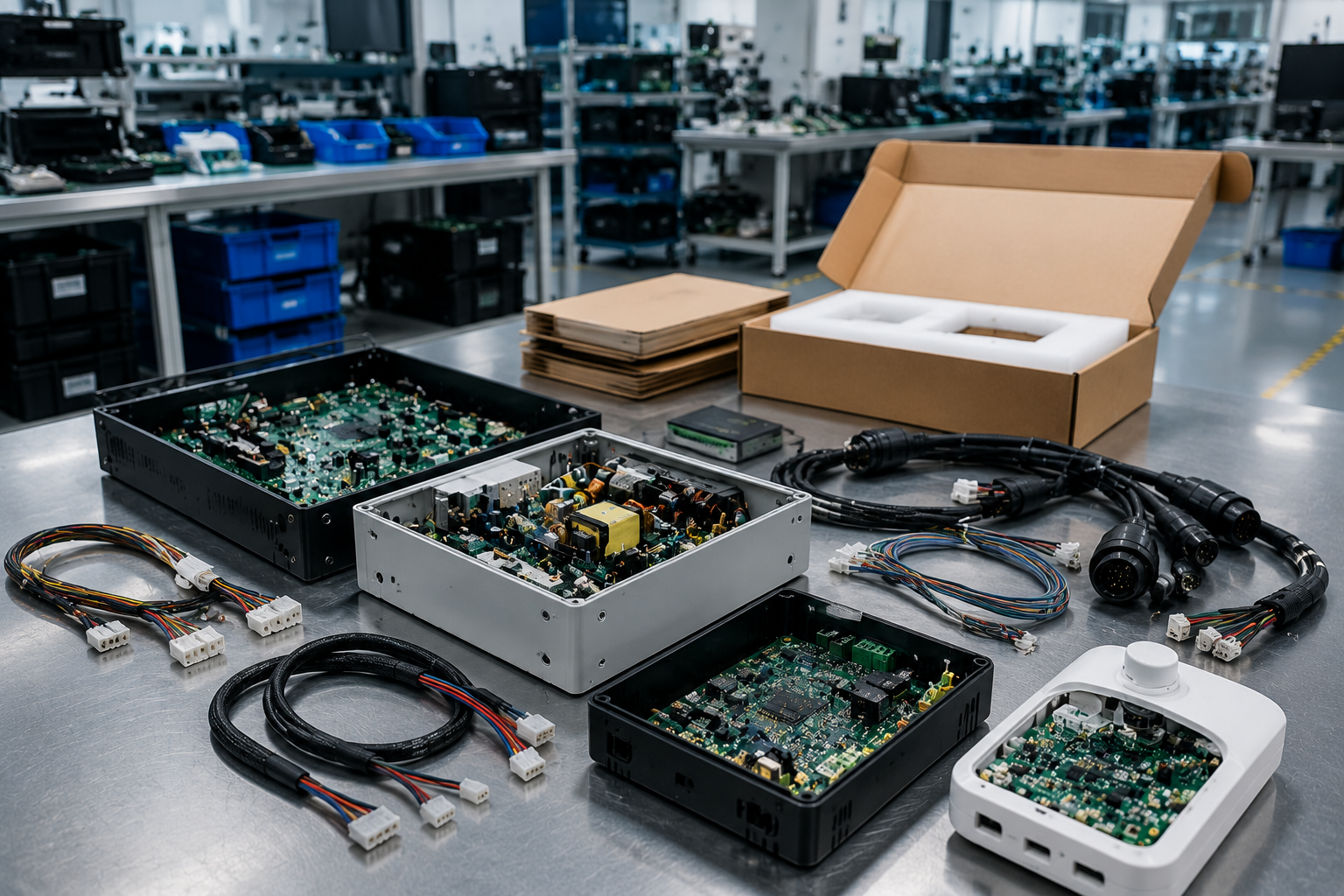
Box Build Assembly Types and What Differentiates Them
Standard Electronics
PCB + enclosure + basic wiring
IoT, Consumer, Smart Home
High-throughput SMT; conveyor final assembly line
Cable-Intensive
PCB + multi-harness + panel + connector routing
Industrial Automation, Telecom
IPC/WHMA-A-620 wire harness compliance; wiring routing per drawing
Electromechanical
PCB + mechanical subassemblies + firmware
Medical, Automotive, Defense
Torque specs; traceability; regulatory documentation package
High-Reliability
PCB + EMI shielding + conformal coating + burn-in
Aerospace, Defense
IPC-A-610 Class III throughout; extended burn-in; X-ray every unit
Ruggedized / IP-Rated
PCB + potting + IP-rated enclosure
Industrial IoT, Outdoor Systems
Environmental sealing; thermal management; vibration screening
Miniaturized
Compact PCB + custom housing + fine-pitch BGA
Wearables, Medical, Handheld
X-ray BGA inspection; precision enclosure tolerances
High-Volume Turnkey
Standardized BOM; automated SMT + conveyor box build
Consumer Electronics, EV Modules
9000mm final assembly conveyor lines; JIT supply chain; inline AOI
Prototype / NPI
DFM-optimized 1–50 units; all complexity levels
Any vertical
Fast-turn with DFM report; component sourcing gap fill
Regulatory-Compliant
Full production records + serialization + traceability chain
Medical Devices, CE-marked
ISO 13485-compatible production tracking; audit-ready records
Full Box Build Capability Every Production Step In-House
For: OEM Procurement Managers
Box builds fail at transitions. When the PCB house, SMT shop, and enclosure integrator each hand work to the next vendor, configuration errors compound, mismatched component revisions, enclosure tolerances that conflict with cable routing, firmware versions that didn’t follow the board. Multi-vendor handoffs in electronics manufacturing produce higher defect rates, extended lead times, and elevated warranty costs compared to single-source production models.
PCBark eliminates these handoffs. Every step below is performed in-house at our facility, nothing is subcontracted without your prior written approval.
Box Build vs. Standard PCB Assembly, Why the Scope Difference Matters
Specification Comparison Matrix
[ MATRIX-01 / SPECIFICATION COMPARISON ]
| Dimension | Standard PCB Assembly | INTEGRATED SYSTEM Box Build Assembly (PCBark) |
|---|---|---|
| Deliverable | Assembled printed circuit board(s) | Complete functional unit, ready to ship to end customer |
| Assembly scope | SMT + through-hole component placement on PCB | PCBAs + cable harnesses + enclosure + firmware + functional test + ESD packaging |
| Vendor count | 1–2 suppliers (PCB house + SMT shop) | 1 supplier — PCBark handles all stages without subcontracting |
| Testing depth | AOI, electrical continuity, optional ICT | 3D SPI → 4× AOI → X-ray (BGA) → functional (system-level) → burn-in option |
| IPC standards | IPC-A-610 (PCB assembly) | IPC-A-610 + J-STD-001 (soldering) + IPC/WHMA-A-620 (cable harness) |
| Firmware load | No | Yes — on-site MCU programming with version verification |
| Packaging | Anti-static bag, basic | Custom ESD-safe packaging; branded labels; barcode and serial tracking |
| End customer? | No — additional integration and assembly steps required | Yes — passes functional test before dispatch; ships directly to your customer or warehouse |
[ ANALYSIS-02 / OEM OVERHEAD REPORT ]
Engineers sourcing their first outsourced product often request PCB assembly when they need box build assembly. The boards arrive tested and correct, then the reality hits: the product still need to be integrated into an enclosure, connected with a cable harness, loaded with firmware, packaged for shipment, and labeled for distribution.
62%
Of North American electronics OEMs planning to increase EMS outsourcing specifically to recover the engineering capacity absorbed by this kind of post-delivery integration overhead.
Source: Research cited by Mordor Intelligence
Box builds and standard PCB assemblies aren’t competing services, they serve different scopes. The table clarifies what each delivers.
[ SELECTION-03 / PROCUREMENT STRATEGY ]
If your product is a board that your engineering team integrates into an existing system they control, standard PCB assemblies may cover your scope. When the finished, tested, labeled unit needs to ship to a distributor, retail channel, or OEM customer, box build assembly is the correct service.
The trade-off of under-specifying at the RFQ stage is avoidable: PCBark’s full capability overview maps every production step in a standard box build quote, from PCB fabrication through ESD packaging and express dispatch.
PCBark’s 5-Stage End-to-End Delivery Model, From BOM to Ready-to-Ship
Most production failures in box builds aren’t manufacturing failures, they’re planning failures caught too late. A BOM with unresolved component alternatives, a cable harness routing that conflicts with enclosure tolerances, a firmware version that didn’t follow the board into integration: these failures surface expensively at Stage 3 or Stage 4 when they could have been caught at Stage 1 for zero cost.
PCBark’s 5-Stage End-to-End Delivery Model is structured to catch problems forward, not backward. Every production run, from 1-unit prototypes to 100,000-unit annual programs, passes all five stages in sequence. Nothing proceeds to the next stage until the current stage is verified.
STAGE 1
Prepare
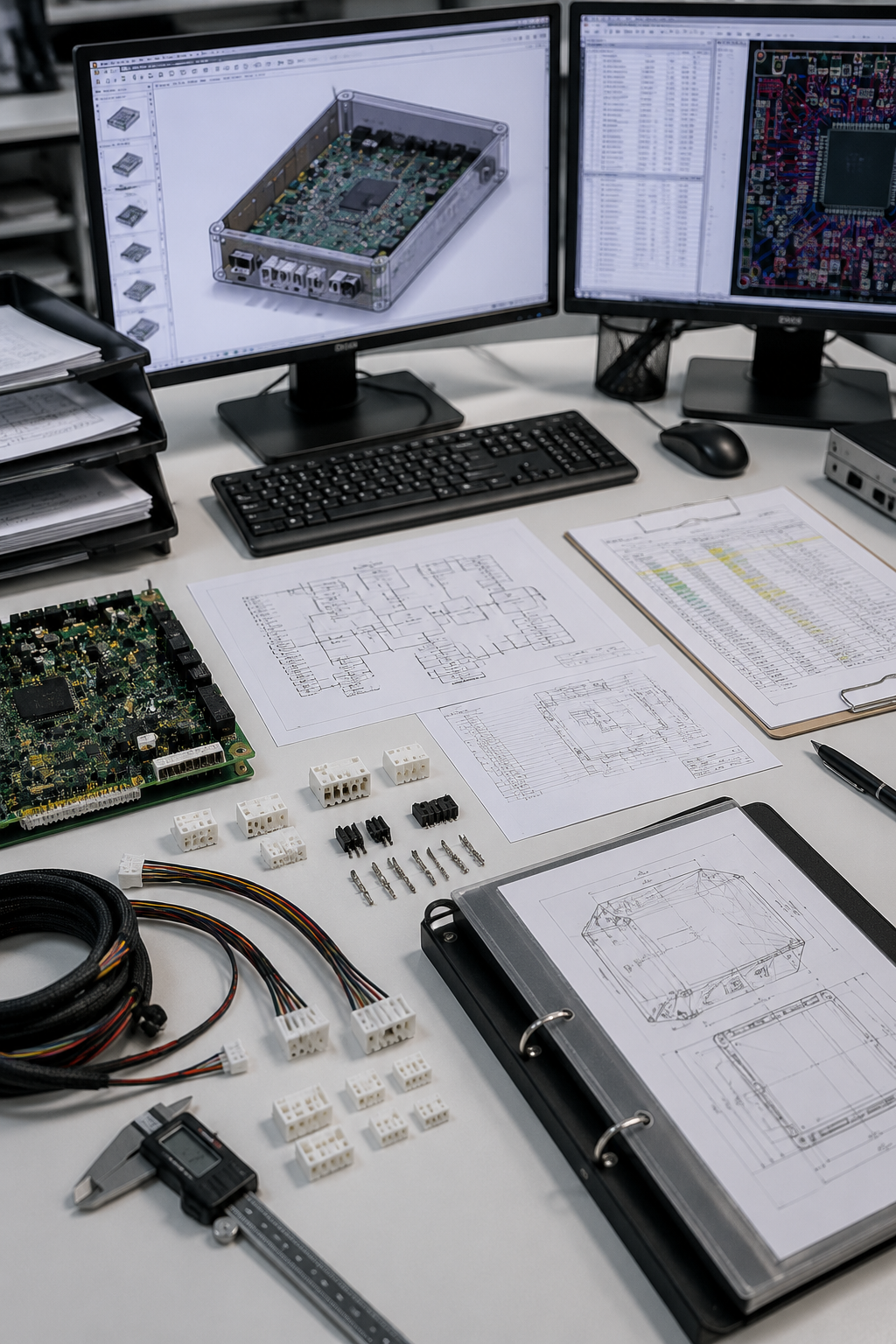
- Free DFM/DFA analysis
- BOM review and gap resolution
- Component sourcing, dual-sourcing for critical parts
- Assembly drawing validation
- IPC class confirmed at quoting stage
- Cable harness routing pre-check vs. enclosure geometry
STAGE 2
Build
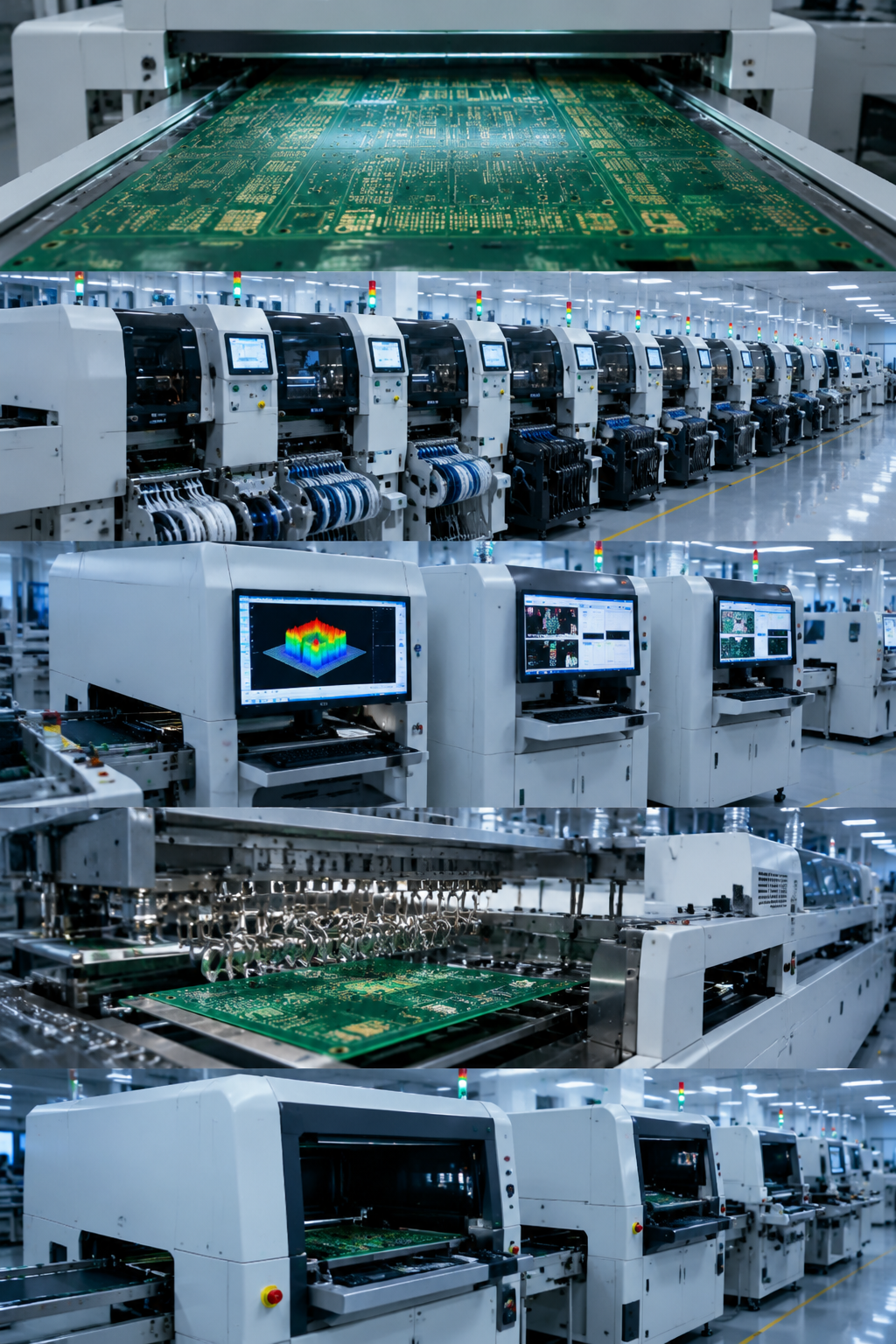
- PCB fabrication (1–42 layers, in-house)
- SMT assembly, 11 Yamaha machines, BGA/CSP/QFN
- 3D SPI solder paste verification (3 systems)
- Through-hole insertion and wave soldering
- Post-SMT AOI (inline dual-track, 2 systems)
STAGE 3
Integrate
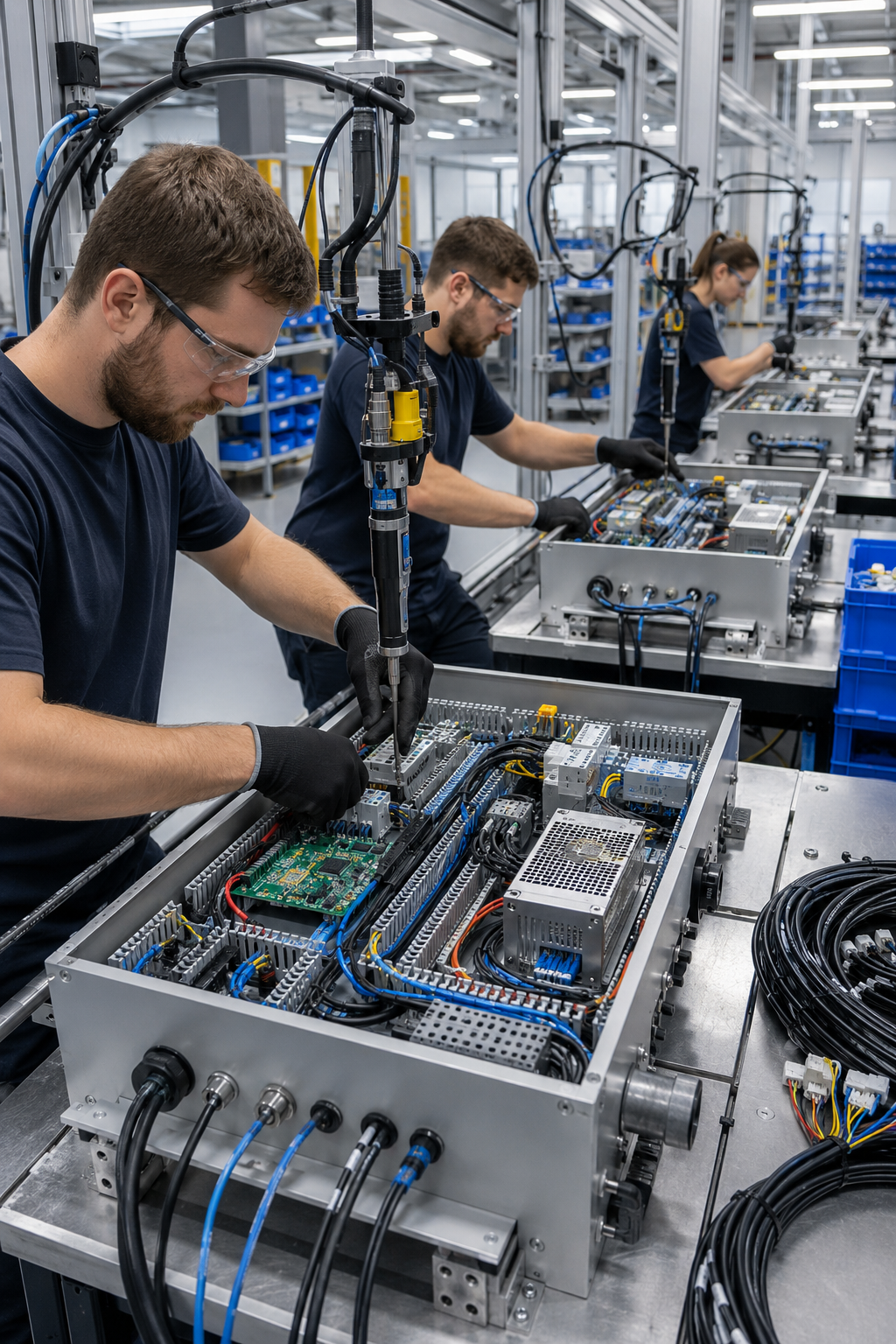
- Cable and wire harness assembly
- Wiring routing per mechanical drawings
- Enclosure mounting and DIN rail fit
- Subsystem integration (PCBAs + power supplies + I/O)
- Mechanical assembly, automated screw-driving, 3 stations
STAGE 4
Verify
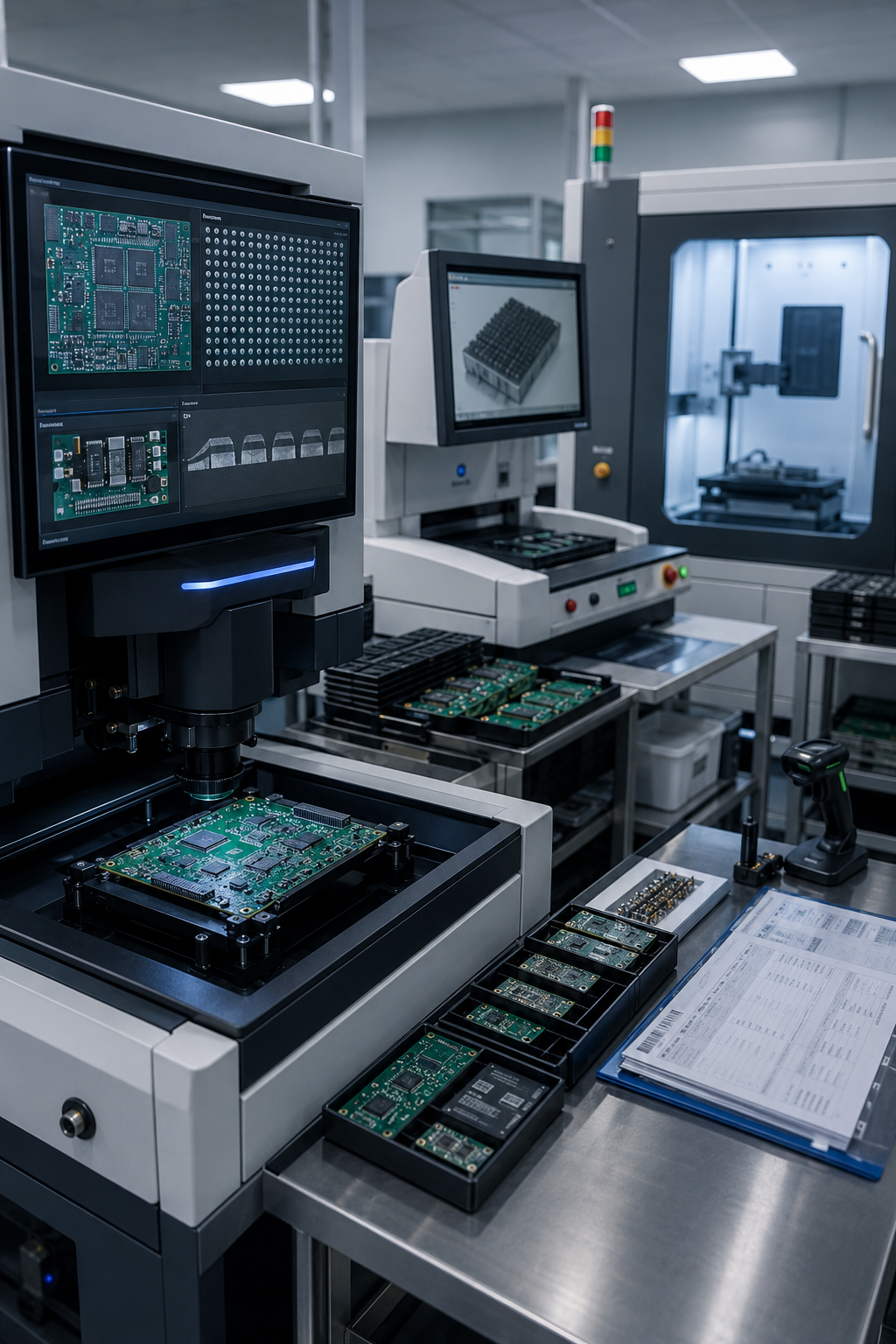
- Post-integration AOI (2 offline systems)
- X-ray inspection, BGA and BTC solder joints
- System-level functional testing
- Burn-in test (on request, medical / defense builds)
- Serialization and traceability logging
STAGE 5
Deliver
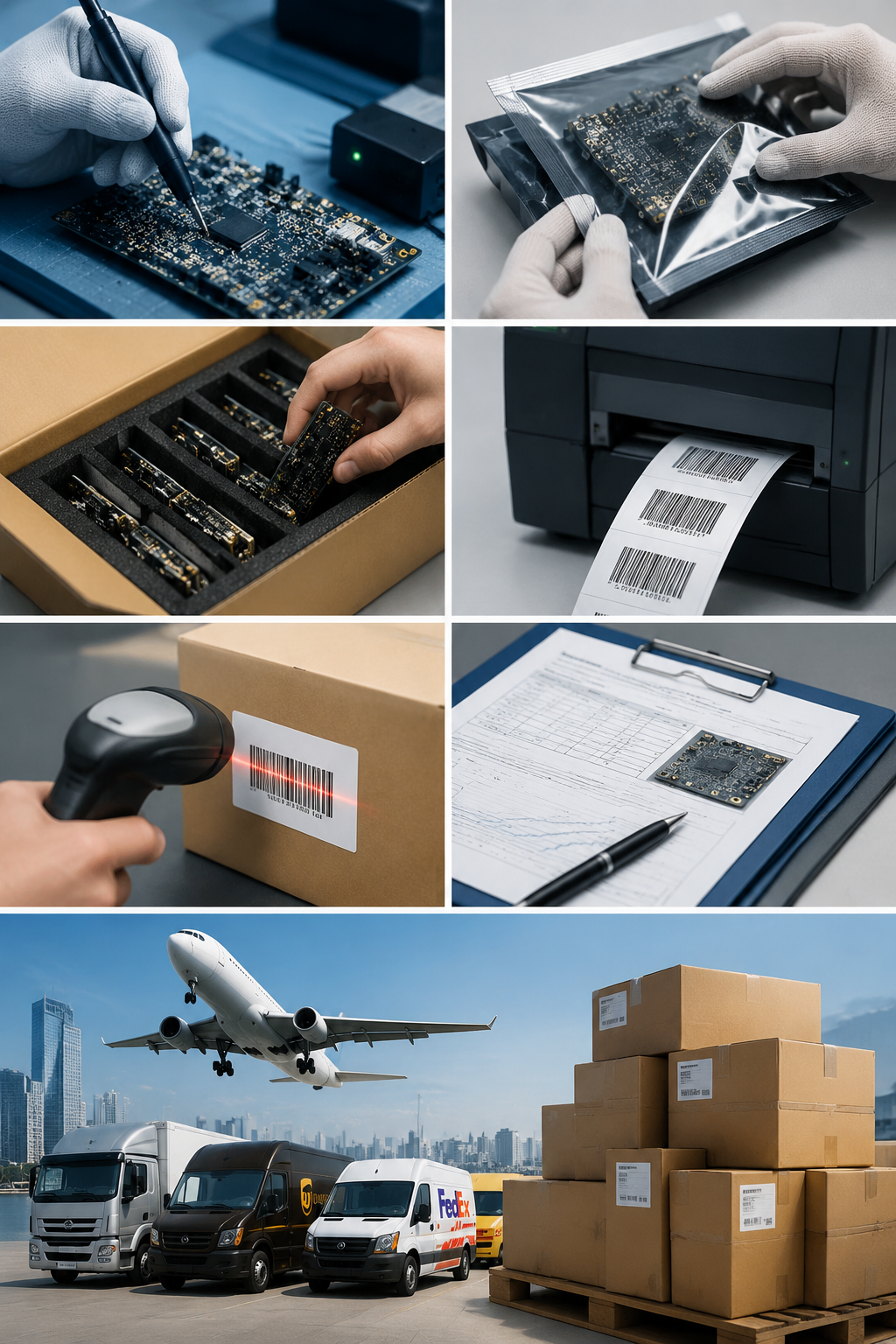
- Firmware programming and version verification
- ESD-safe packaging and custom labeling
- Barcode and serial number assignment
- Test report and documentation package
- DHL / FedEx / UPS express dispatch from Shenzhen
Box Build vs. Standard PCB Assembly, Why the Scope Difference Matters
Engineers sourcing their first outsourced product often request PCB assembly when they need box build assembly. The boards arrive tested and correct, then the reality hits: the product still need to be integrated into an enclosure, connected with a cable harness, loaded with firmware, packaged for shipment, and labeled for distribution. That remaining scope wasn’t in the PCB assembly quote, wasn’t in the engineering budget, and wasn’t on the project timeline.
62%
Research cited by Mordor Intelligence puts 62% of North American electronics OEMs planning to increase EMS outsourcing specifically to recover the engineering capacity absorbed by this kind of post-delivery integration overhead.
Box builds and standard PCB assemblies aren’t competing services, they serve different scopes. The table below clarifies what each delivers:
If your product is a board that your engineering team integrates into an existing system they control, standard PCB assemblies may cover your scope. When the finished, tested, labeled unit needs to ship to a distributor, retail channel, or OEM customer, box build assembly is the correct service. The trade-off of under-specifying at the RFQ stage is avoidable:
PCBark’s full capability overview maps every production step in a standard box build quote, from PCB fabrication through ESD packaging and express dispatch.How Much Does Box Build Assembly Cost?
Box build assembly pricing doesn’t follow a universal per-unit figure — production scope varies too widely between assembly types. A simple IoT enclosure (one PCB, basic cable harness, plastic housing) and a medical-grade electromechanical system (IPC-A-610 Class III, full traceability, ESD packaging) don’t share the same production chain, testing depth, or cost structure. PCBark’s single-source model eliminates the inter-vendor margin stack entirely.
Despite what initial per-unit assembly quotes suggest, the honest reality is this: the lowest PCB assembly price rarely represents the lowest total program cost. Multi-vendor coordination overhead, rework from scope mismatches, and late-stage integration failures cost more than the unit price differential between a qualified single-source EMS partner and an uncoordinated multi-supplier chain. The breakdown below reflects where PCBark’s in-house model creates the measurable financial advantage.
Value Drivers, Where the Real ROI Comes From
Verified, Proprietary Data
Full in-house vertical integration: PCBark fabricates PCBs, assembles PCBAs, assembles cable harnesses, and integrates enclosures without subcontracting.
Single-source production eliminates inter-vendor price stacking and coordination overhead.
No MOQ at any volume tier: Prototype box builds run on the same production line as high-volume programs. One unit carries the same DFM review and quality inspection as 10,000 units. No tooling fees. No NRE charge. Free DFM analysis on every quote.
Industry-Benchmarked
Outsourcing adoption is accelerating: 62% of North American electronics OEMs (ISM survey) plan to raise outsourcing levels over the next 3 years.
The primary driver is freeing engineering capacity from assembly management. Single-source box build partnerships reduce per-program overhead consistently vs. multi-vendor coordination.
Supply chain disruption cost: 38% of manufacturers reported line stoppages due to component lead-time volatility. PCBark’s dual-sourcing strategy and JIT inventory model mitigate this risk from Stage 1 of the 5-Stage Delivery Model.
Competitive Context
Asia-Pacific EMS pricing advantage: China-based EMS manufacturing carries a highly optimized overhead structure in labor, facilities, and components.
While China coastal wages have risen 8–10% annually from 2020–2024, PCBark’s engineering depth, 22+ years of accumulated process knowledge, and full in-house capability keep per-unit costs competitive across all volume tiers.
Box Build Assembly Complexity Guide, Indicative Lead Times by Type
| Assembly Type | BOM Complexity | Testing Scope | Indicative Lead Time | Primary Verticals |
|---|---|---|---|---|
| Standard Electronics | Single PCB + basic wiring + simple enclosure | Functional test only | 15–20 business days | IoT, Consumer, Smart Home |
| Cable-Intensive Build | PCB + multi-harness + panel integration | Functional + wiring verification | 20–25 business days | Industrial Automation, Telecom |
| Electromechanical | PCB + mechanical subassemblies + firmware | Functional + ICT + burn-in optional | 25–30 business days | Medical, Automotive |
| High-Reliability | PCB + EMI shielding + conformal coating | IPC-A-610 Class III + full burn-in | 30–45 business days | Aerospace, Defense |
| Ruggedized / IP-Rated | PCB + potting + IP-rated enclosure | Environmental + functional + vibration | 25–35 business days | Industrial IoT, Outdoor |
| Miniaturized | Compact PCB + custom housing + BGA components | X-ray (BGA) + functional | 20–30 business days | Wearables, Medical |
| High-Volume Turnkey | Standardized BOM; automated conveyor line | Inline AOI + functional (sampling) | 20–30 business days | Consumer Electronics, EV Modules |
| Prototype / NPI | 1–50 units; any complexity level | Functional + DFM report | Fast-turn (7–10 business days) | Any vertical |
| Regulatory-Compliant | Full records + serialization + traceability | Full audit trail; serialized test records | 30–45 business days | Medical Devices, CE-marked |
To receive an accurate quote for your box builds, submit your BOM and enclosure drawings. Our DFM team reviews within 24 hours and returns a quote with any design or cost-reduction flags identified before you commit to production.
Ready to get a price? Submit your BOM for a 24-hour quote with no commitment.
Request a Quote — 24-Hour ResponseTesting and Quality Assurance, How Every Box Build Gets Verified Before It Ships
IPC-A-610J, the current globally adopted electronics assembly acceptability standard, revised in March 2024 with participation from 31 countries as confirmed by ANSIdefines three quality classes with strict, auditable acceptance criteria. PCBark builds to Class II (standard dedicated-service electronics) or Class III (high-reliability, life-critical) by specification, confirmed at the quoting stage, not assumed after production begins.
Box build assemblies at PCBark fall under two supplemental standards beyond IPC-A-610: J-STD-001 for soldering materials and processes, and IPC/WHMA-A-620 for cable and wire harness assembly acceptability. This tri-standard framework governs the complete scope of box builds, not just the PCB, but the harness, the connectors, and the mechanical integration.
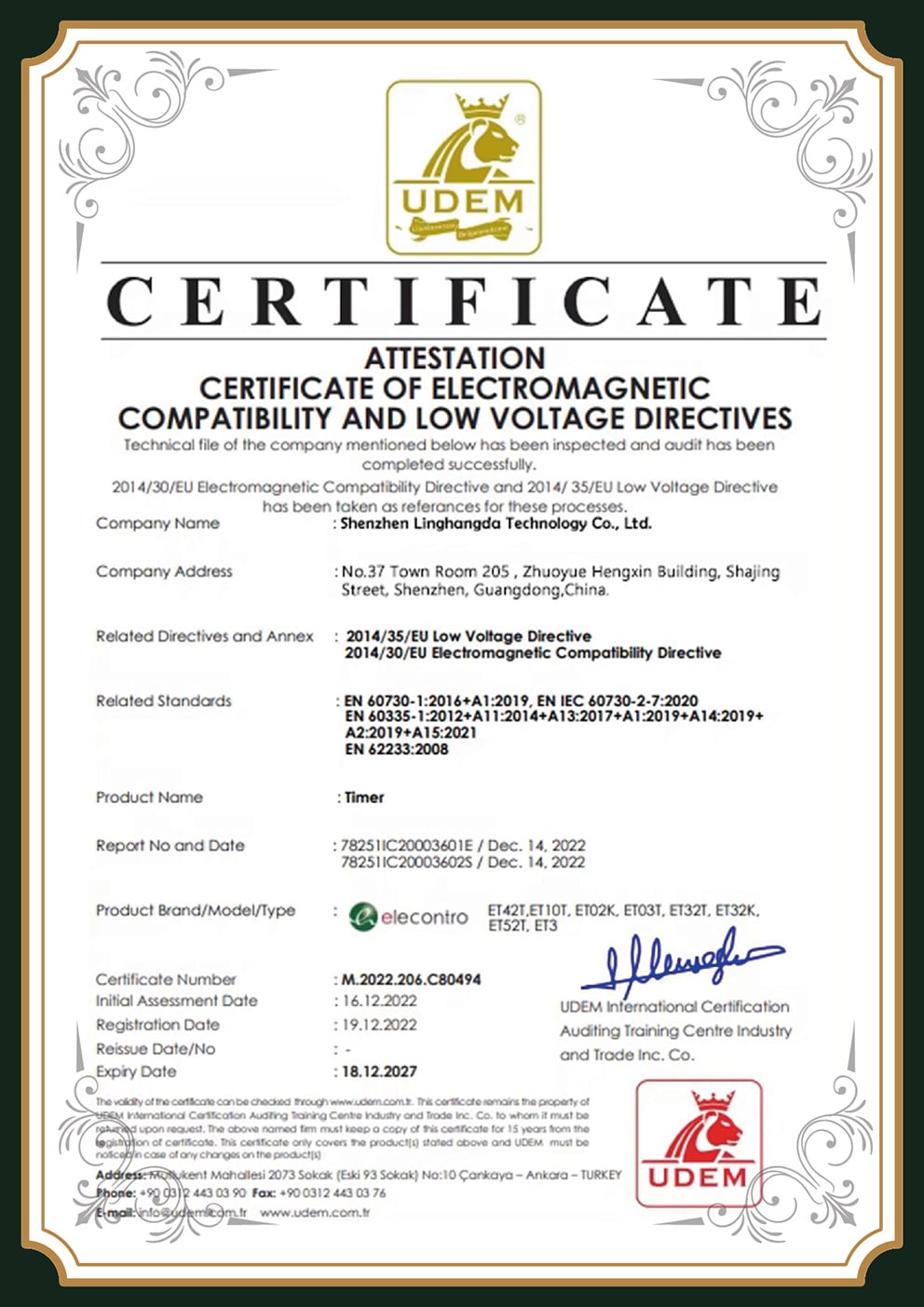
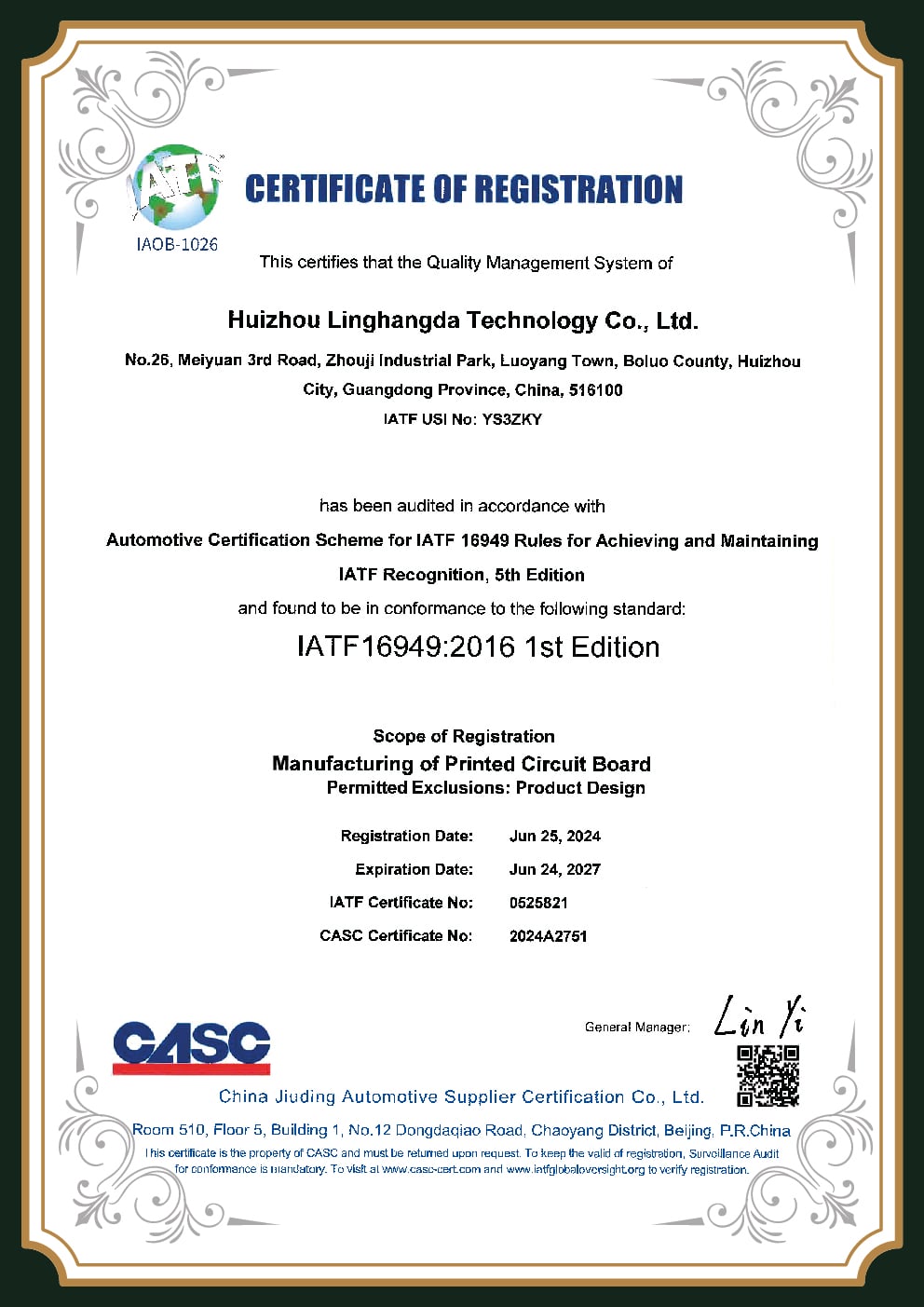
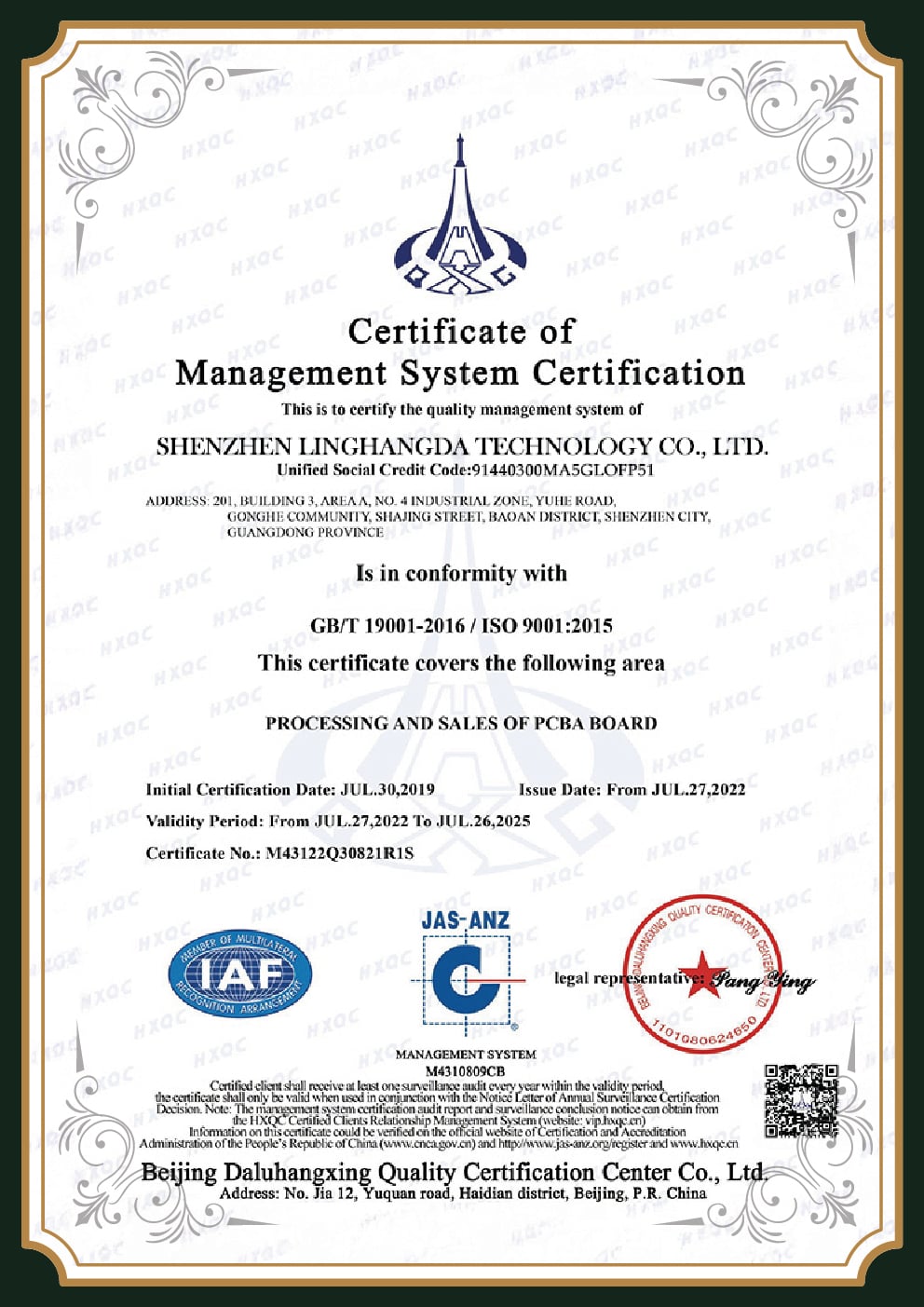
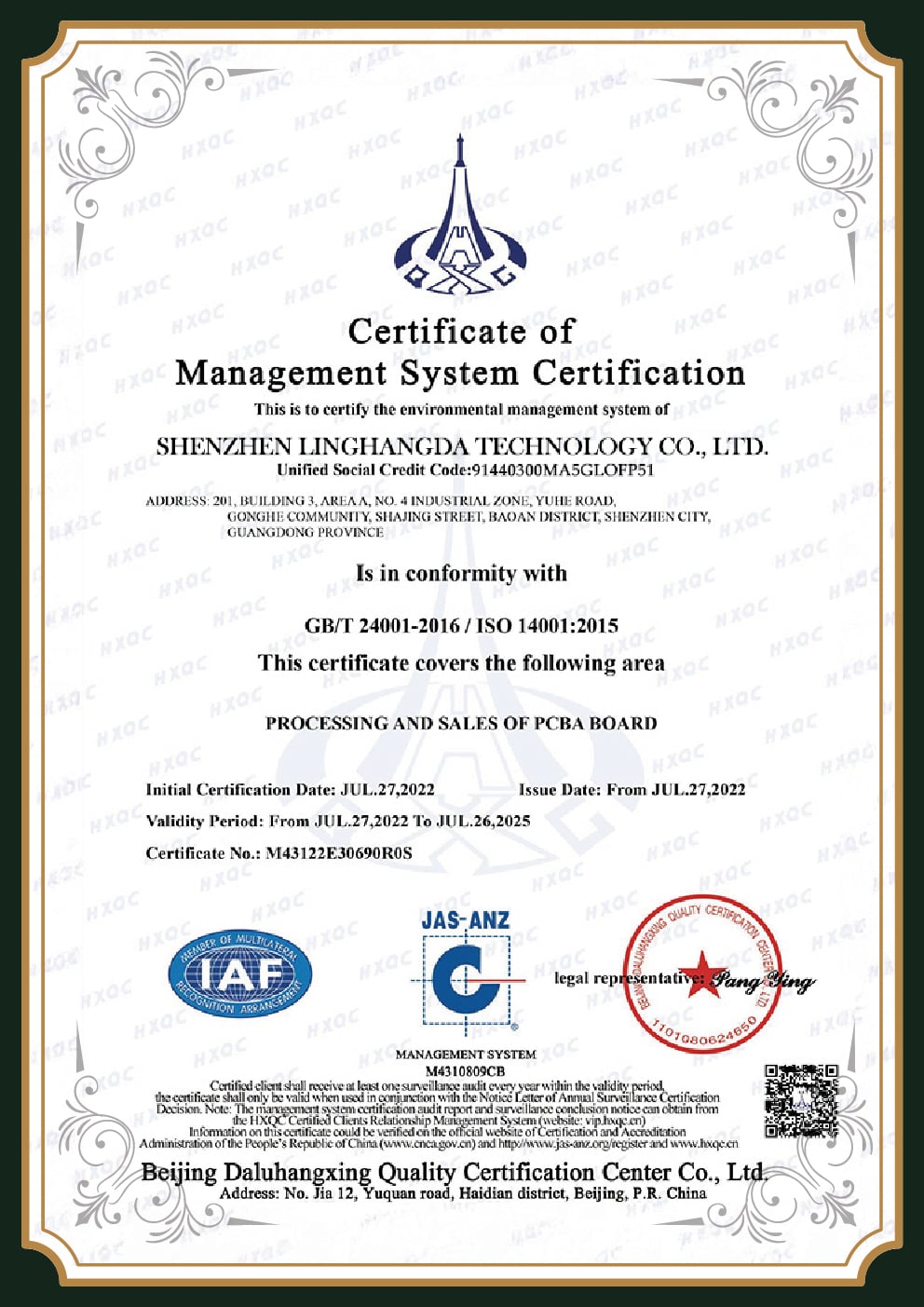
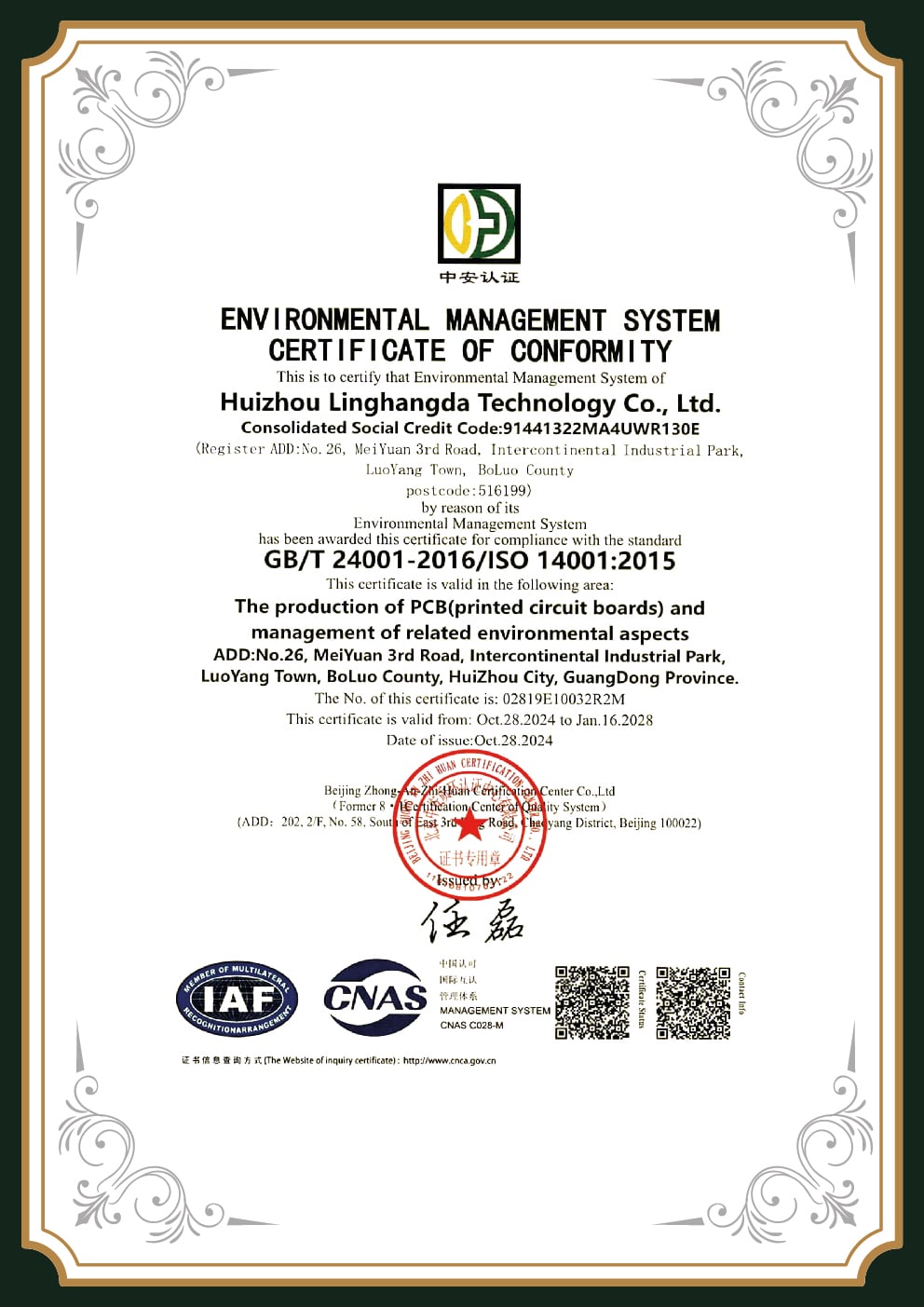

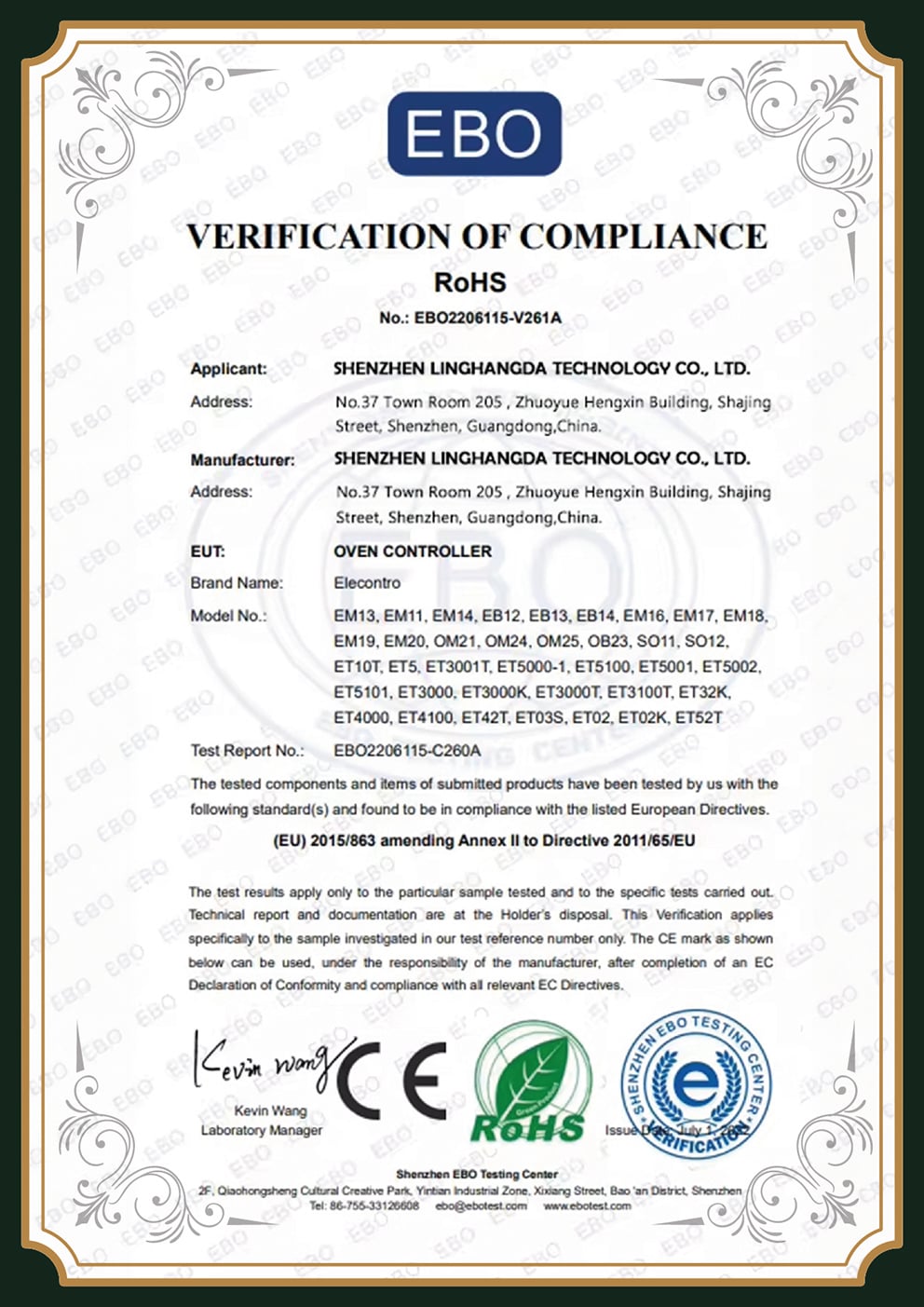
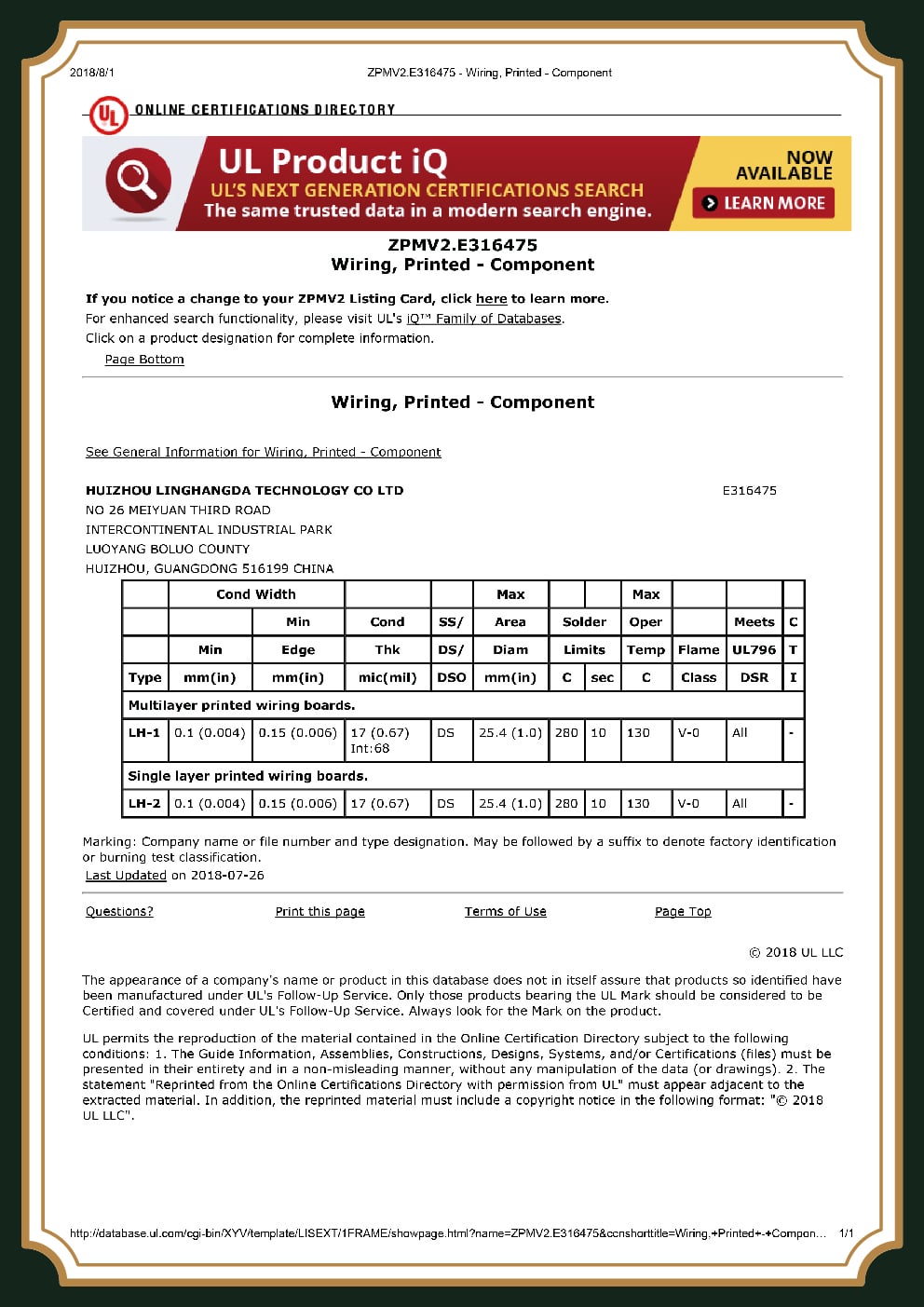
All box builds pass a six-step inspection and verification sequence before shipment:
3D SPI, Solder Paste Inspection
Three VCTA-V850E systems verify solder paste volume, alignment, and coverage on every panel after screen printing, before any component is placed. Out-of-spec paste is caught here, before it becomes a solder bridge or cold joint downstream.
Post-SMT Inline AOI
Two inline dual-track AOI systems inspect component placement, orientation, polarity, and solder joint formation immediately after reflow. Real-time defect capture, not batch sampling.
X-Ray Inspection
BGA, BTC, and QFN packages are inspected by X-ray for solder joint formation and void percentage, defects that AOI can’t detect under packages.
Post-Integration Offline AOI
Two additional offline AOI systems re-inspect assembled boards after box build integration, catching any handling damage or connector-induced PCB damage.
System-Level Functional Testing
The complete assembled unit is tested for system-level performance, power-on behavior, signal routing, firmware execution, and I/O verification at the unit level.
Burn-In Test (on request)
Units are powered under elevated thermal conditions to screen for early-life failures before shipment, standard practice for medical, aerospace, and industrial defense box builds per NASA Electronic Parts and Packaging (NEPP) electronics reliability requirements.
Industries We Serve with Turnkey Box Build Assembly
When assembly requirements differ sharply by vertical, a medical device needs ISO 13485-compatible traceability and serialized test records; a consumer IoT product needs cosmetic inspection standards and high-volume throughput; an aerospace assembly requires IPC-A-610 Class III controls throughout, choosing an EMS partner without vertical-specific production experience transfers their learning curve costs to your program timeline and budget.
The global box build assembly services market reached USD 8.4 billion in 2024 and is projected to grow to USD 15.2 billion by 2033 at a 6.7% CAGR, according to DataIntelo industry research. Industrial automation commands the largest revenue share at 32.78%, while medical electronics is the fastest-growing segment at 8.42% CAGR through 2030. PCBark box builds serve all ten primary application verticals from our Shenzhen manufacturing facility:
| Industry | Representative Applications | Key Requirements for Box Builds |
|---|---|---|
| Medical Devices | Diagnostic systems, patient monitors, imaging modules, insulin pump controllers | ISO 13485-compatible production; full traceability; biocompatible materials selection |
| Industrial Automation | PLC panels, relay racks, robotics controllers, HMI systems | DIN rail integration; IEC-compliant wiring; EMI shielding; connector routing per specification |
| Automotive | Infotainment systems, ECUs, battery management modules, ADAS sensor interfaces | AEC-Q100 components; thermal management design review; vibration and shock resilience |
| Telecommunications | Base station modules, routers, edge compute nodes, fiber optic repeaters | High-density connector routing; EMC compliance; thermal design for fanless systems |
| Renewable Energy | Smart inverters, solar tracking controllers, battery storage management systems | IP-rated enclosures; extended temperature range; surge protection integration |
| Consumer Electronics | Wearables, home automation hubs, gaming consoles, streaming devices | High-volume throughput; compact BGA assembly; cosmetic inspection standards |
| Security & Surveillance | CCTV controllers, access control units, biometric reader systems | Compact enclosure design; outdoor-rated builds; low-power design validation |
| IoT Devices | Industrial sensors, asset tracking units, edge gateway systems | Miniaturized PCB + custom housing; wireless module integration; firmware OTA support |
| Aerospace & Defense | Avionics assemblies, radar modules, secure communication units | IPC-A-610 Class III; ITAR-compatible production controls; full serialization and traceability |
| Test & Measurement | Environmental testers, sensor fusion platforms, calibration instruments | Precision PCB tolerances; calibration records; connector-dense chassis integration |
Why Choose PCBark for Turnkey Box Build Assembly
Selecting a box build assembly partner is a production architecture decision, not a supplier selection. Switching EMS partners mid-lifecycle carries real cost: requalification testing, tooling transfers, record transfers, and lead time gaps during transition. The trade-off favors thorough upfront evaluation: the criteria that hold up at scale, quality system maturity, production depth, and engineering support accessibility, are the ones worth assessing before production begins, not after problems surface.
Buyer Concerns, Addressed With Evidence
"We've had quality problems with China EMS before."
Contrary to the common perception that China EMS quality is inherently inconsistent, the differentiating factor is not geography, it is the quality management system in place, the inspection equipment depth, and the certification rigor applied. PCBark specifies your IPC-A-610 class at the quoting stage, Class II or Class III, and holds that specification through production. Every box build passes 3D SPI, 4-system AOI, X-ray (BGA), and functional testing before dispatch. ISO 9001:2015 governs our QMS. 22 years of EMS production means our quality systems are mature, not being built while your order runs.
"IP protection is a real concern with Asian manufacturing."
Standard NDA agreements, controlled factory access for design files, and no subcontracting of your assembly without prior written disclosure are contractual commitments, not policy language. For over two decades, PCBark's client roster has covered medical device manufacturers, telecommunications infrastructure providers, and defense electronics programs, all industries where IP controls are contractually required.
"Lead times from China are too long for our programs."
Prototype box builds ship fast-turn in 7–10 business days. Standard production runs 15–30 business days by assembly complexity. DHL, FedEx, and UPS express deliver door-to-door from Shenzhen. More meaningfully: DFM review at Stage 1 catches design issues before production, eliminating the rework loops, firmware version mismatches, enclosure clearance conflicts, BOM substitutions, that extend real lead times by weeks, not days.
"We can't get a quote without a fully complete BOM."
Submit a partial BOM and product brief. Our DFM team fills in component gaps, identifies alternatives for long-lead or EOL parts, and flags design issues before we quote. This is a standard free service, not an engineering engagement with billable hours. It removes quote friction for first-time OEMs and new hardware programs. Submit what you've to get a quote started.
PCBark vs. Typical EMS Alternatives, Side by Side
| Criteria | PCBark | Mid-Tier US EMS | Unqualified Asia Shop |
|---|---|---|---|
| PCB Fabrication | In-house, 1–42 layers, all types | Subcontracted to PCB vendor | Subcontracted; quality variable |
| SMT Equipment | 11 Yamaha pick-and-place; BGA/CSP/QFN | Typically 2–4 machines; limited BGA | Older machines; limited fine-pitch capability |
| Cable Harness Assembly | In-house, IPC/WHMA-A-620 | Usually subcontracted | Often absent or subcontracted |
| IPC Certification | IPC-A-610 Class II/III — specified at quote | IPC-A-610 Class II (standard) | Claimed; rarely third-party audited |
| Inspection Depth | 3D SPI (3) + AOI (4) + X-ray + Functional | AOI + basic functional test | Visual inspection only or basic AOI |
| DFM Review | Free with every quote | Billable engineering engagement | Not typically offered |
| Minimum Order | No MOQ — 1 prototype or 100,000+ units | 50–500 unit minimums typical | Often high-volume only; NRE required |
| Annual Capacity | 500,000 sq m — disclosed | Not disclosed | Not disclosed |
Review your box build requirements with our DFM team, free, no commitment required.
Get Your Free BOM ReviewBox Build Assembly Smart Toolkit
Lead Time Estimator
Production Scheduling
Calculate precise manufacturing and integration cycles based on your BOM complexity and volume tiers instantly.
RFQ Readiness
Design Verification
Audit your Gerber files, BOM data, and 3D enclosure drawings against engineering assembly requirements.
Source Savings
Cost Optimization
Analyze financial overhead reductions achieved by eliminating cross-vendor margin stacking and coordination.
IPC Class Guide
Quality Standards
Identify inspection thresholds, structural compliance protocols, and testing depths required across IPC classes.
Knowledge Base
Frequently Asked Questions
A box build assembly is the complete integration of electronic and mechanical subcomponents, printed circuit board assemblies, cable and wire harnesses, power supplies, connectors, enclosure hardware, and firmware, into a finished, functional, tested unit. The output is a product ready for immediate deployment, distribution, or direct shipment to an end customer. PCBark handles box builds across all complexity levels, from single-unit prototypes to high-volume mass production runs.
Standard PCB assemblies deliver assembled boards, components are placed and soldered, but the board isn't integrated into a system. Box build assembly takes assembled PCBAs and combines them with cable harnesses, enclosure hardware, firmware, and other subassemblies, then tests the complete system and packages it for shipment. Box builds represent the step from "assembled board" to "finished product ready for an end customer."
Turnkey box build assembly means the EMS partner manages the entire production chain, component sourcing, PCB fabrication, SMT and through-hole assembly, cable harness assembly, enclosure integration, firmware programming, functional testing, and shipping. You provide the design files and BOM; PCBark manages everything from component procurement to packaged product. Our DFM review, included free with every quote, aligns your design to production requirements before manufacturing begins.
Box build pricing depends on BOM complexity, enclosure type, IPC class requirements, testing depth, and production volume. Simple IoT enclosure builds with a single PCB and basic cable harness cost significantly less per unit than medical-grade electromechanical assemblies requiring IPC-A-610 Class III compliance and full traceability records. Submit your BOM and enclosure drawings to PCBark, our DFM team reviews within 24 hours and returns a quote with any cost-reduction flags identified before you commit to production.
Prototype box builds at PCBark ship fast-turn in 7–10 business days. Standard production cycles run 15–30 business days for most assembly types. High-reliability and regulatory-compliant builds requiring extended burn-in or full traceability requirements run 30–45 business days. DFM review at Stage 1 of our delivery model catches design issues before production begins, eliminating the rework loops, firmware conflicts, enclosure tolerance mismatches, BOM substitutions, that extend lead times on preventable issues.
Yes, system-level functional testing is a standard step in PCBark's box build production chain. Every box build passes functional testing before shipping. Our testing infrastructure includes 4 AOI systems (2 inline, 2 offline), 1 X-ray system for BGA/BTC inspection, and functional test stations. Burn-in testing is available on request for medical and defense applications. Customer-supplied test fixtures are supported; we can also design test jigs for high-volume programs.
A complete Bill of Materials with component specifications, mechanical drawings for the enclosure, PCB Gerber files, assembly drawings, firmware requirements, and any applicable regulatory or IPC class requirements. If you've a partial BOM or early-stage drawings, PCBark's DFM team reviews what you've, identifies gaps, and advises on design adjustments, all free with any quote request. Download our 9-item Box Build Assembly RFQ Checklist to confirm you've the essentials before submitting.